
A notable feature of Prince Philip’s funeral of 2021 was the carriage and two ponies standing in the quadrangle of Windsor Castle. The gesture was a nod to the Duke of Edinburgh’s passion for carriage driving, and a feature he had chosen, having planned his own funeral well ahead of time.
But what is carriage driving? Where did it come from? And why did Philip love it so?
Philip hangs up the polo mallet
After years of playing polo, a 50-year-old Prince Philip turned to the sport of carriage, or combined, driving in 1971, which at the time had only just been officially recognised as a discipline within the International Federation for Equestrian Sports (FEI).
Embed from Getty Images
Embed from Getty Images
It seemed he was in search of the speed, exhilaration and occasional danger that polo offered - so carriages were a perfect fit. It was just as fast-paced, but would require a different set of skills, controlling the team of horses from the box seat instead of the saddle. Carriage driving also didn't strain his wrist (the reason for his polo retirement) like tennis or golf did.
Using carriages and horses owned by the Royal Family, Prince Philip started training on the grounds of Sandringham in Norfolk before taking on regional and international competitions, help from Major Tommy Thompson, the former riding master of the Household Cavalry.
It was his passion for the sport that propelled it to new heights, building a steady foundation for which it continues to thrive on today through new generations.
But where did the sport come from?
From carriages to cars
Before the invention of motorised vehicles, horse and carriage had been the main mode of transportation for centuries. This use faded away from mainstream culture as more people opted for vehicles in the 20th century, and as cars became more affordable, but carriages were eventually revived as an equestrian sport with competitors of all ages across the world.
Driving competitions were modelled after riding competitions, with the sport of combined driving taking inspiration from three-day eventing. Combined driving started to grow in the 1960s, spearheaded by the then President of the FEI, the Duke of Edinburgh.
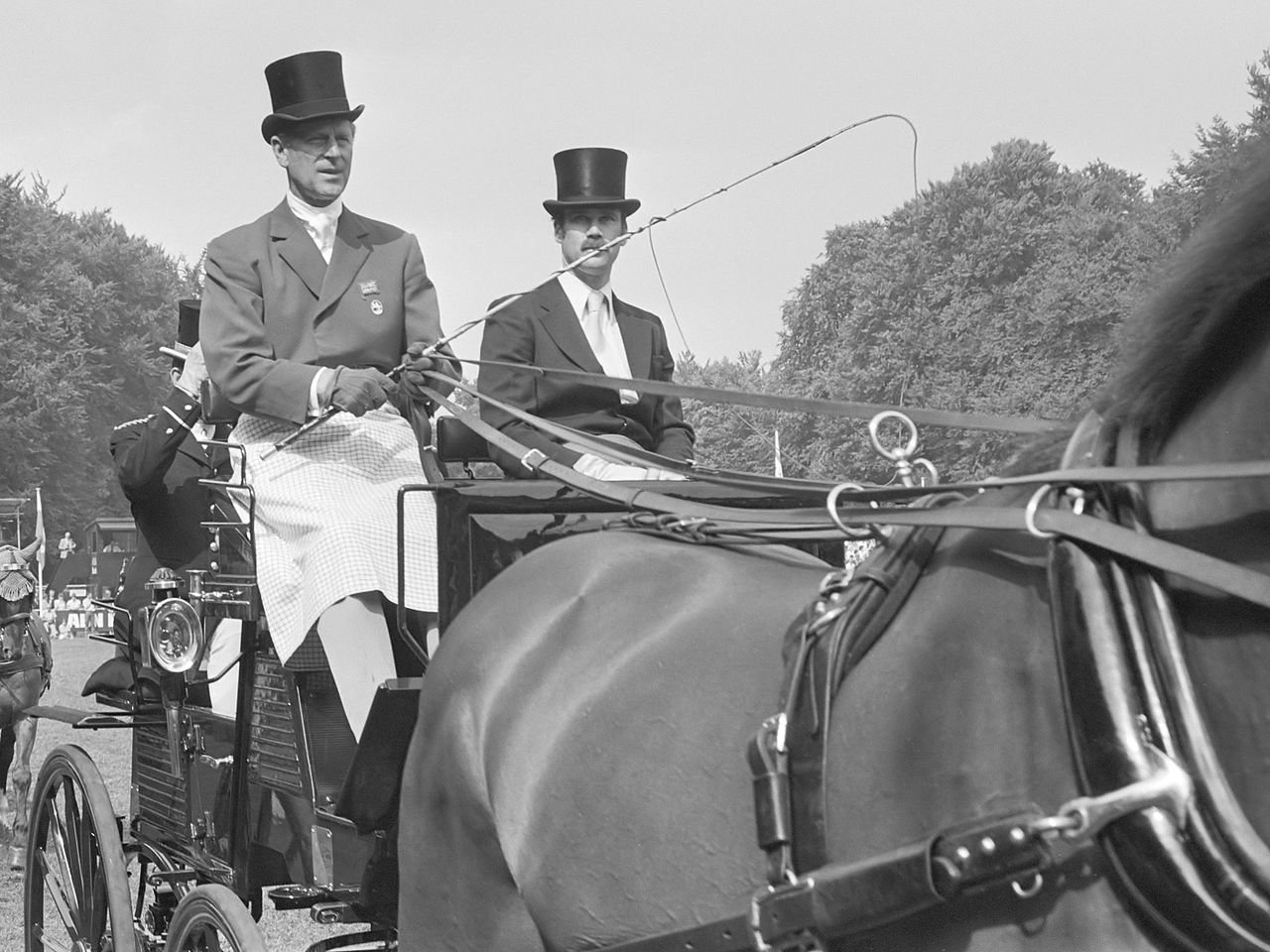
He was instrumental in creating the first set of international rules for the new sport of driving trials in 1968.
Since this was a new sport, there were not many competitors but he was surprised at how quickly the sport gained popularity. By 1975 there were 15 four-in-hand competitors in Britain.
What is combined driving?
Combined driving competitions take place over a three-day period, referred to as phases.
- The first phase is a dressage test, which asks drivers and a team of either two or four horses to perform a variety of movements across the different gaits, being walk, trot and canter; these are then scored 1-10.
- The second phase is a marathon, which challenges teams to travel uphill, downhill, and around a variety of obstacles in a specific pattern under a time limit - quite challenging with multiple horses and a carriage in tow!
- The third phase is a cones challenge, where teams must travel through a course the fastest without knocking down a cone. Each phase of the event is regulated by a set of rules and standards and judged according to the recognised rule book, which was first published with the assistance of Prince Philip.
Taking on the competition
After training at Sandringham, the Duke entered his first competition in 1973. Philip placed fourth of 10 competitors, granting him a spot in the European Championships that same year. Unfortunately, he was unable to finish this competition due to a bent axle.
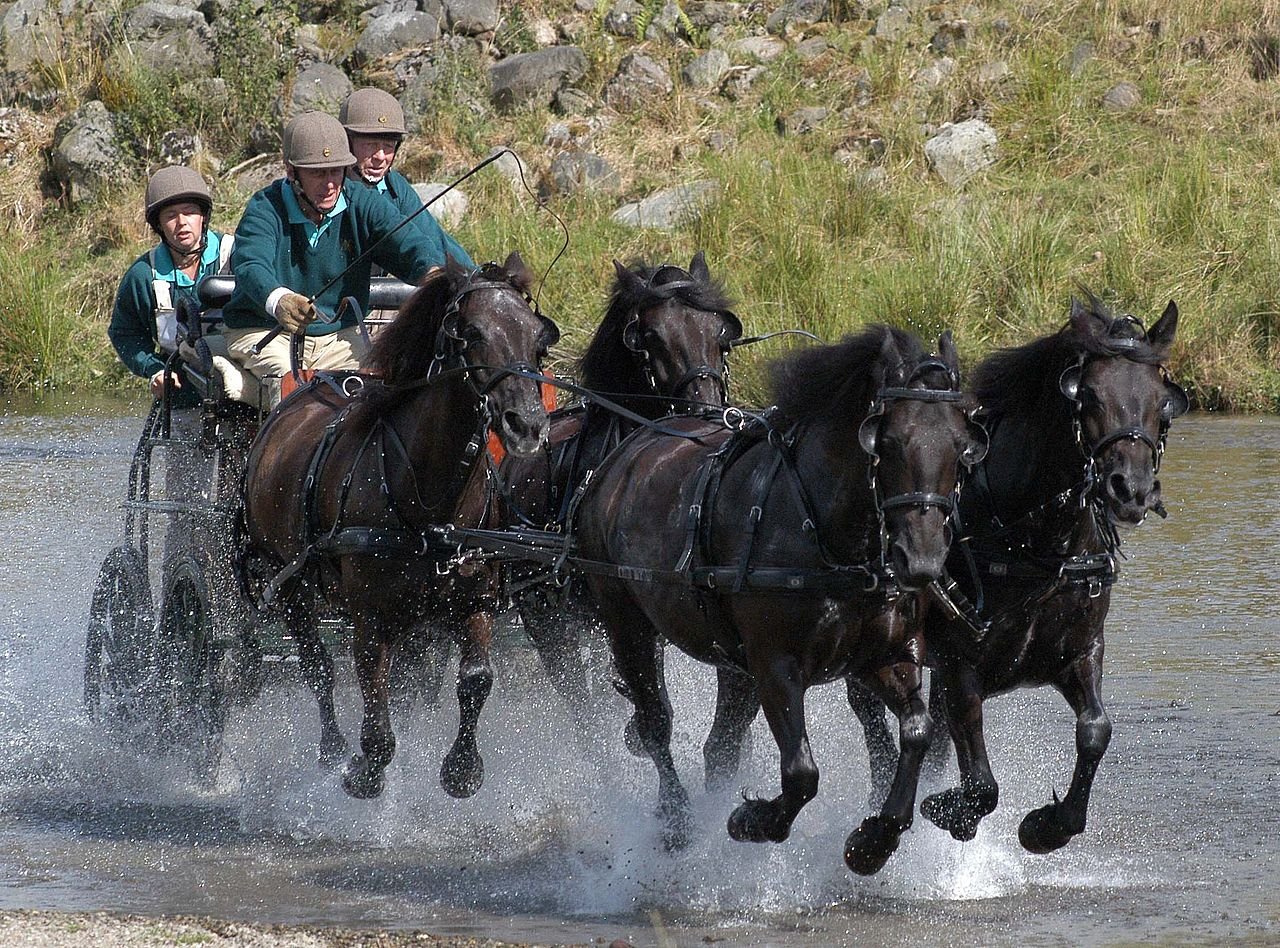
Six years later, the Prince would go on to compete as a member of the 1980 gold medal team at the World Championships.
He was certainly a skilled driver: across his career, the Duke of Edinburgh competed in a total of six World Championships and three European Championships. He would continue to compete even into his later years, driving a team of Fell ponies at the World Pony Championships in 2005 - aged 83!
The social aspect of the sport was also something Philip relished; he described the season as a ‘peripatetic weekend party’ for like-minded people.
But in addition to this, the Duke was designing carriages for decades too, using his knowledge and passion to create his own custom vehicles for use.
Philip’s legacy continues
After retiring from the competition scene in 2003, Prince Philip remained an active member of the driving community. He published three books on the sport, discussing his involvement in it. '30 Years On and Off the Box Seat' is a lively account of his early experiences and competitions within the sport. His other two books on the subject, 'Competition Carriage Driving' and 'Driving & Judging Dressage' discuss matters of judging, strategy, and technique.

His books are regarded in the driving community as must-reads, thanks to the Duke’s trusted knowledge and beaming passion, evident within its pages.
His legacy continues on today through his granddaughter Lady Louise, who also enjoys the sport and is regularly seen in the driving seat at Windsor during the season.
After the death of Prince Philip in 2021, Lady Louise inherited her grandfather’s carriage and horses. In a touching tribute, she drove his carriage at the Royal Windsor Horse Show in 2022, and continues to compete regularly.

The popularity of the sport has grown significantly since the 1970s, with fans and competitors across the globe. Prince Philip can be attributed with securing a solid foundation for the sport of combined driving, ensuring its enjoyment for many more years to come.