The 500-year old Tudor necklace, worn at the court of Henry VIII, has been saved by generous donations to the British Museum’s fundraiser.
The Museum launched a campaign in October to save the rare piece of jewellery, to ensure it would go on public display and not hide away in a private collection. After four months, the news comes that they have hit the amount needed to purchase the piece directly from the finder, before it goes up for auction.
Damian Lewis, who played Henry VIII in the BBC series Wolf Hall, faced the campaign, which saw more than 45,000 people contribute £360,000 – making up more than 10% of the funds raised.
This added to the £1.75 million grant from the National Heritage Memorial Fund and £500,000 from the Julia Rausing Trust.
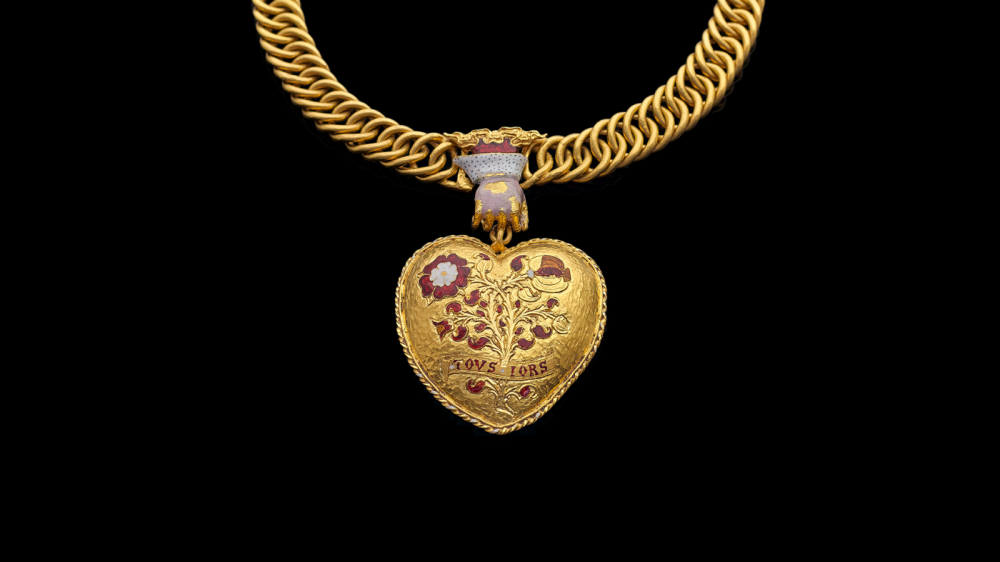
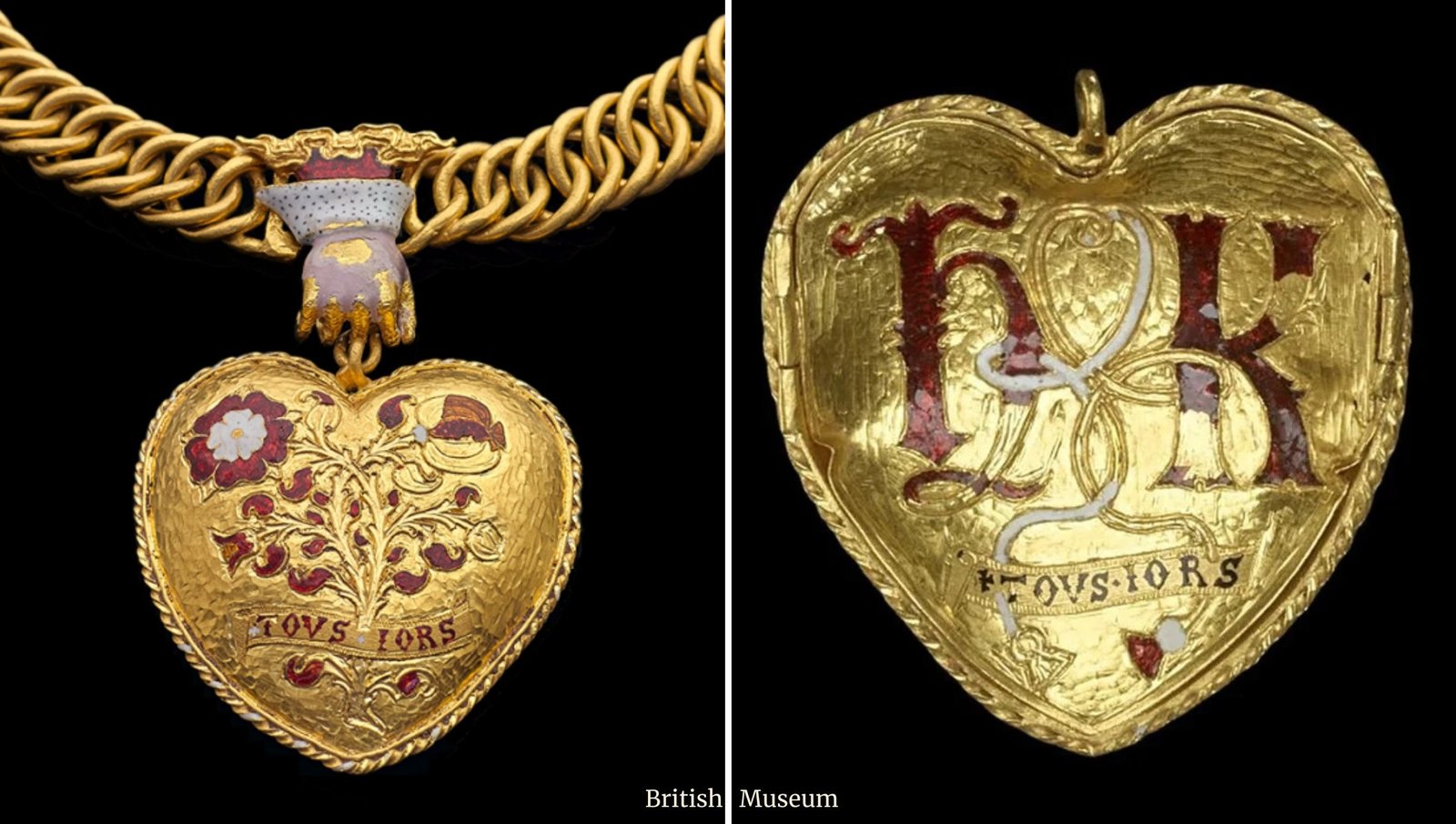
Known as the Tudor Heart thanks to its design, the necklace could have been worn by Katharine of Aragon – but more likely a senior courtier.
Made from 24 carat gold, the piece is comprised of a 75-link gold chain, enamelled hand clasp and a large heart-shaped pendant. The heart itself features the initials H and K (after the King and Queen), their emblems of the Tudor rose and the pomegranate with enamelling, entwined by their branches, as well as a banner featuring the word ‘tousiors’ (the old French for ‘always’).
London goldsmiths were often commissioned to create ‘costume’ jewellery for large celebrations, which were for a short time. This necklace in particular is thought to have been created in 1518, to mark the betrothal of Princess Mary to the French Dauphin (Francois). Mary was just eight-months old at the time.
The necklace is currently on display at the British Museum, but it is hoped the Heart will eventually tour the UK once the purchase has gone through, including the location of its discovery, in Warwickshire.
Charlie Clarke, a café owner and amateur metal detectorist from Birmingham, found the treasure in 2019 in a dried-up pond.
‘The Tudor Heart has the word “tousiors” on it, which is the old French for “always”,’ Dr Nicholas Cullinan, director of the British Museum, said. ‘That phrase is poignant as the heart will now always be in a public collection, saved for generations to come and made possible by extraordinary support.’