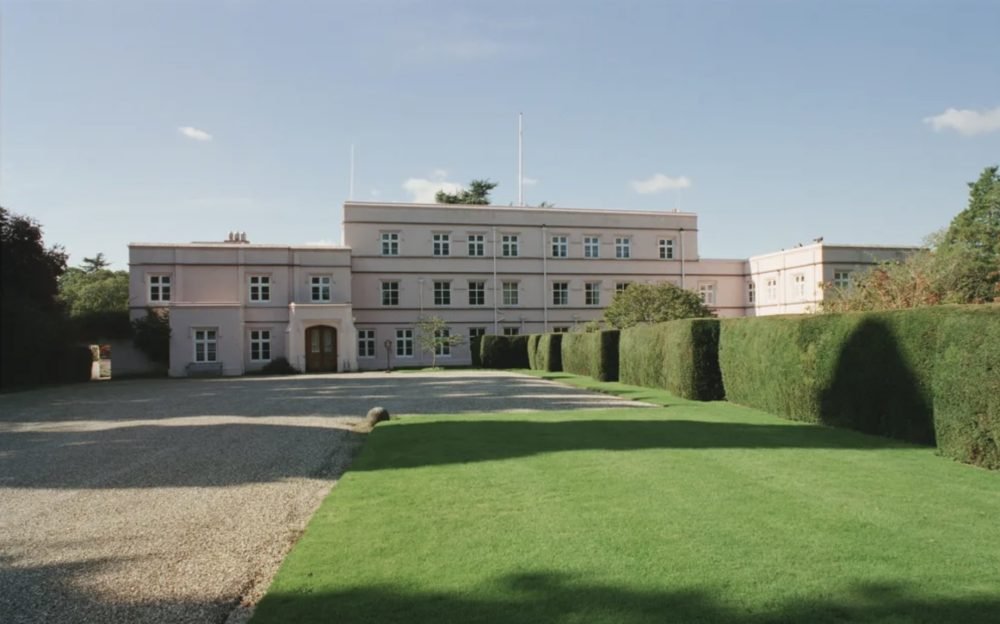
Royal Lodge is a grand and historically-significant royal residence located in Windsor Great Park, a short distance from Windsor Castle. The estate has served as a home to members of the British Royal Family for centuries, and – until recently – was occupied by the Duke of York, now Andrew Mountbatten-Windsor.
We’ve taken an in-depth look at the house, including who has lived here over the years…
Interior and exterior of Royal Lodge
The exterior of Royal Lodge is in white stucco (which during the Queen Mother’s lifetime was pale pink) and appears rather boxy thanks to its evolution over the years. You can see the wide central block and that there are additional small wings added, making it a grand 30-room mansion.
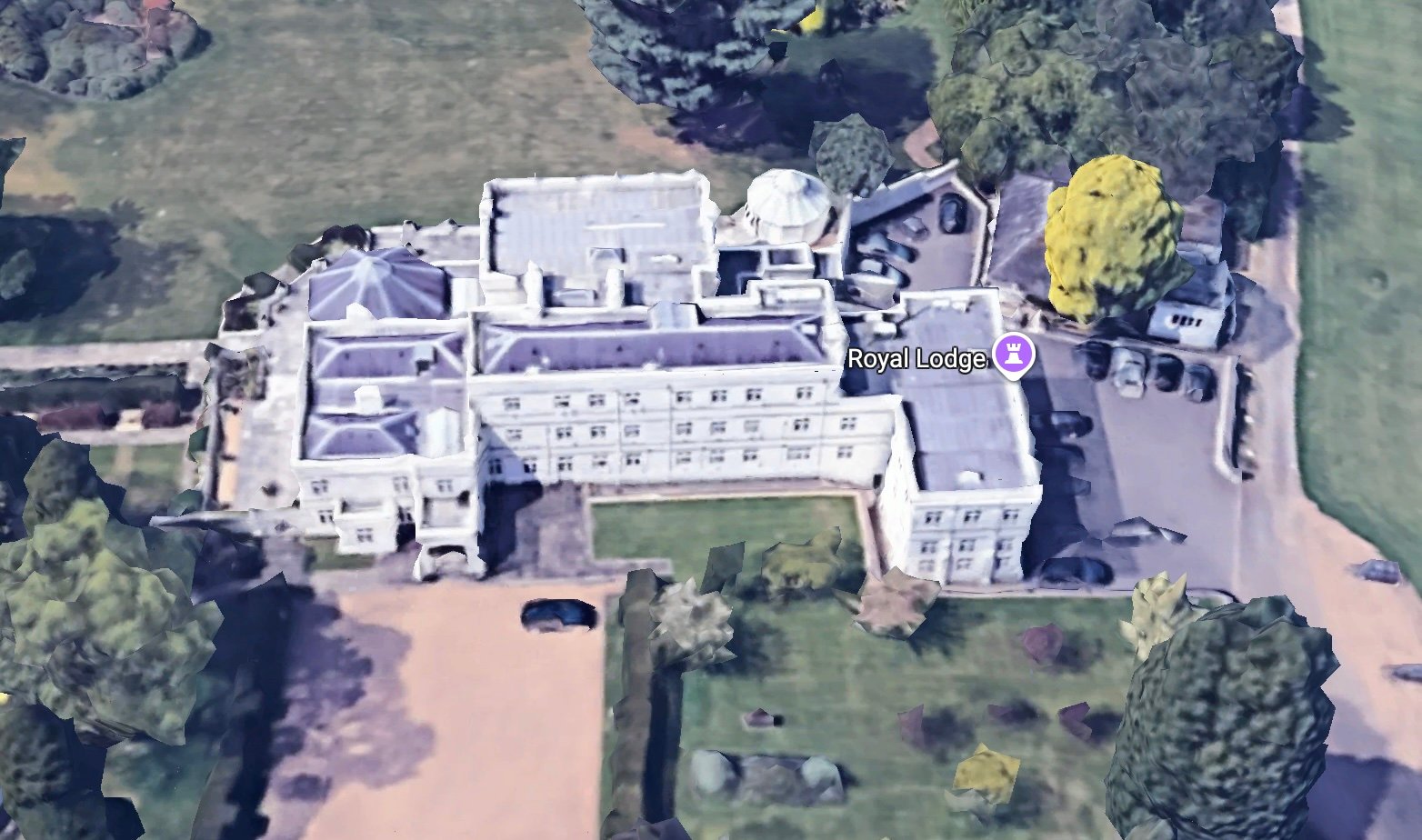
The house spans four floors, including an almost-hidden lower floor that is built into the side of the small hill which it sits. It is so large that both Princess Eugenie held her evening wedding reception at Royal Lodge in 2018 for a reported 800 guests.
The gardens – which sit in 98 acres – can be accessed via a wraparound raised terrace across the south and west fronts to catch the sun, with wooden furniture.
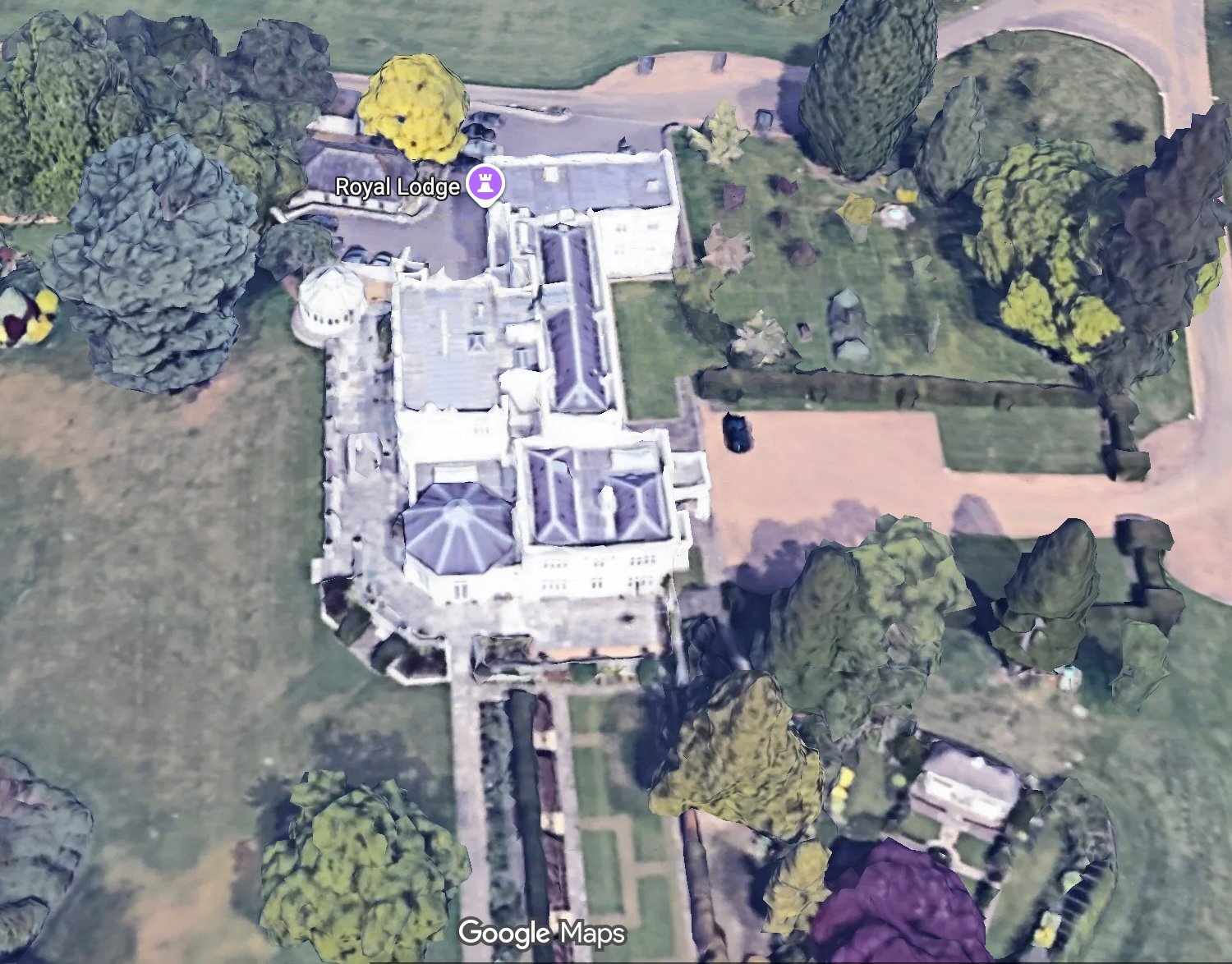
In the south-west corner is the Georgian octagonal conservatory, flooded with light, which we saw frequently during lockdown videos from Sarah Ferguson, occupied by wicker furniture and plenty of knick knacks.
Perhaps the room we know the most about is the drawing room, thanks to its distinctive decor making it recognisable in photos, from a family photoshoot in 1942 to Princess Margaret’s 1960 engagement photos, as well as Eugenie’s 2016 Harper’s Bazaar interview.
A shade of pale green, the room has shields bearing coats of arms around the top and cornicing and railing throughout for a very traditional feel.

This is complemented by overlapping persian rugs covering the parquet floor, and the traditional dark wood side tables, crystal candelabras, red velvet chairs, plump and dark velvet sofas, golden lamps, a carved stone fireplace and family photos littered across surfaces. Harper’s Bazaar called it ‘the definition of comfy cosy’.
The windows are also recognisably arched in the gothic style, with the outside topped by crown ornamentation and inside featuring ornate plaster pillars. The room leads onto the terrace.
View this post on Instagram
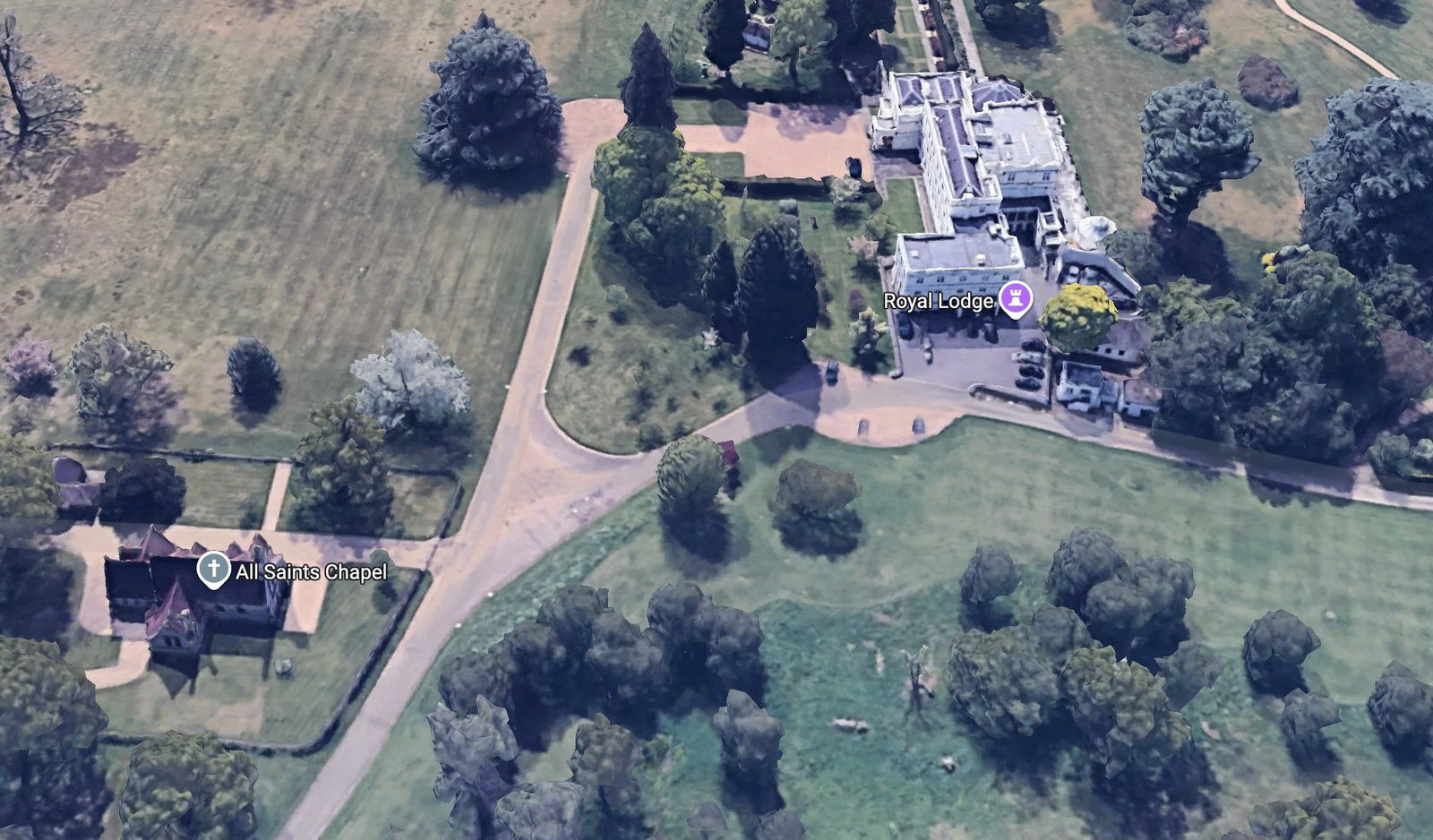
The little cottage (Y Bwthyn Bach), used by Princess Elizabeth and Princess Margaret as children, lies just metres from the main house, in the south east corner of the garden, while a short walk down the driveway takes you to All Saints Chapel, where Princess Beatrice married in 2020.
It has been suggested that there was at least one full-time gardener at the Lodge to keep it pristine.
The origins of Royal Lodge
The origins of Royal Lodge date back to the mid-seventeenth century, with a house on the site by 1662, at the other side of what would become the Long Walk of Windsor: a 2.5 mile avenue of trees running south from the castle, created in the 1680s.
By 1750, the small Queen Anne-style brick house was being used alongside an adjacent dairy. During this period, it was known by various names, including the Lower Lodge to distinguish it from nearby Cumberland Lodge (then called the Great Lodge) and the Dairy Lodge.
From the mid-eighteenth century, the residence was occupied by military topographer and artist Thomas Sandby. He served as Deputy Ranger of the Great Park, to oversee the running and maintenance of the wider Windsor estate reporting into the Ranger (usually the Monarch, or a close family member), and the villa was then called the Deputy Ranger’s House.
Expanded in 1792, Deputy Ranger’s house later became the home of Joseph Frost, the Park Bailiff, and subsequently, the General Superintendent of Farms after Sandby’s death.
Architectural change at Royal Lodge
In 1812, the Prince Regent, and future George IV, used Lower Lodge as temporary housing while he planned the rebuilding of Cumberland Lodge.
The house underwent significant alterations under the direction of architect John Nash, one of his favourites, who is responsible for the large-scale renovation and expansion of Buckingham Palace, as well as the building of the ornate Brighton Pavilion.
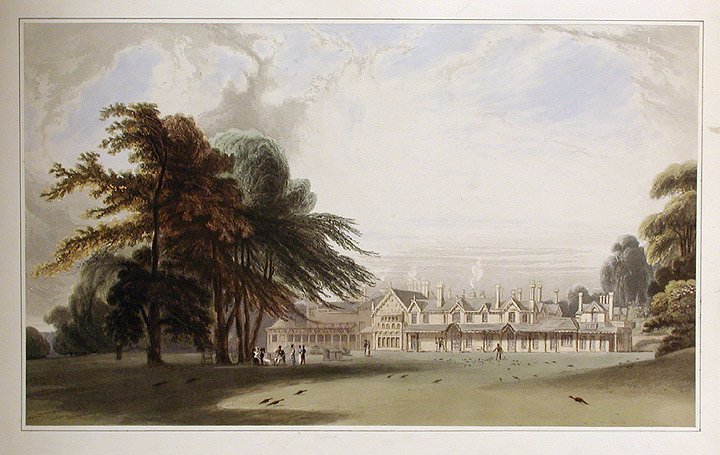
As the renovations continued, the property transformed into a large and elaborate cottage in the cottage orné style, characterised by thatched roofs, verandas, and a conservatory.
In 1815, it became known as the Prince Regent’s Cottage.
The renovation of Cumberland Lodge was eventually abandoned, and after 1820, further additions were made to the property. By the late 1820s, the house was renamed Royal Lodge.
In 1825, the Royal Chapel of All Saints was built on the grounds of Royal Lodge, just down the driveway. The chapel was commissioned by George IV to serve as a private place of worship for the residents and staff of Royal Lodge, and the surrounding Windsor estate.
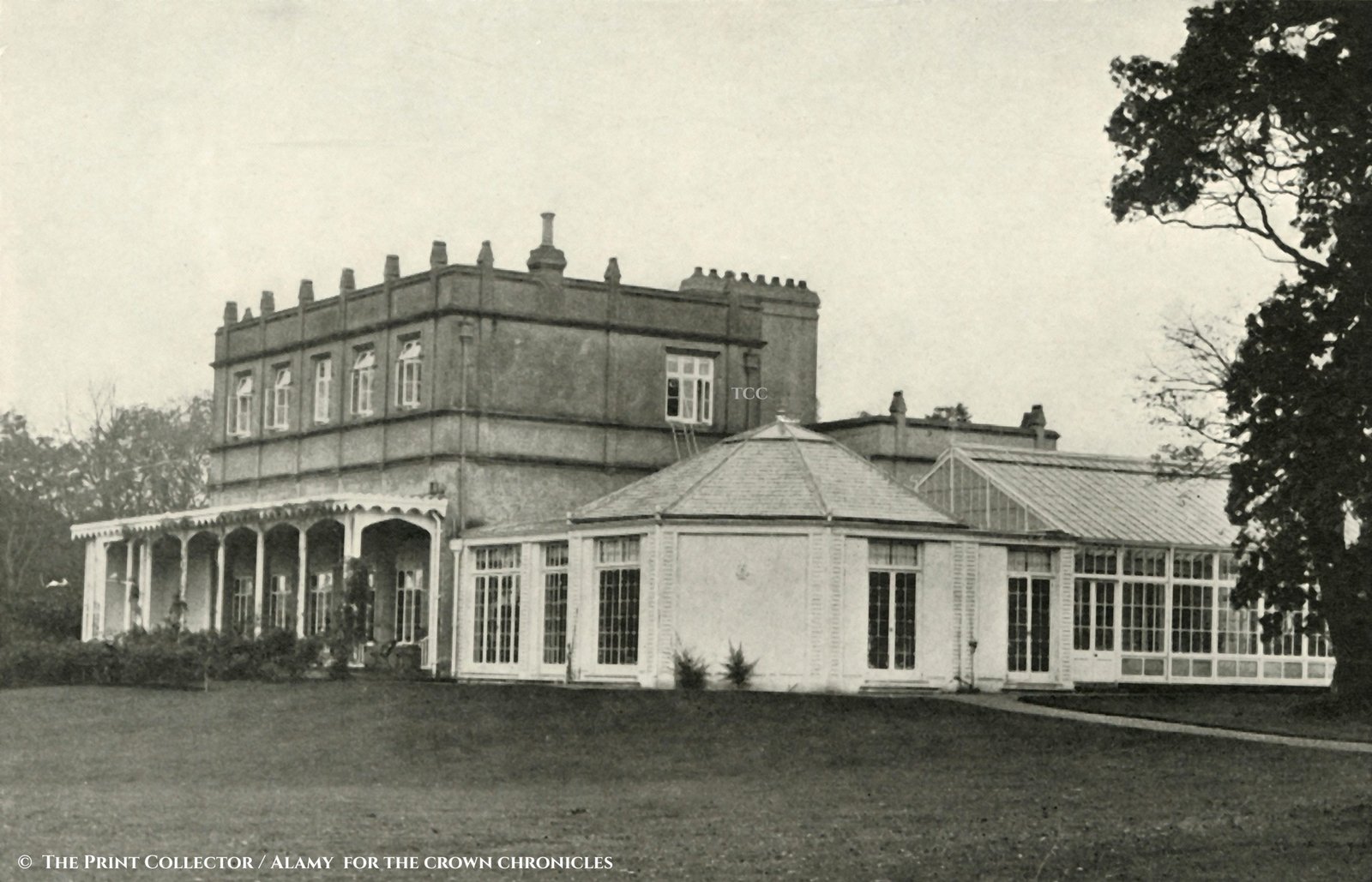
However, in 1830, William IV ordered the demolition of most of the house except for the conservatory. It was briefly used for accommodation by officers of the royal household from 1843-1873, and again from 1873-1931.
George VI and Queen Elizabeth
In 1932, the Duke and Duchess of York (later King George VI and Queen Elizabeth) moved into Royal Lodge.
Their young daughters, Princess Elizabeth and Princess Margaret, spent many of their early years there. The lodge provided them with a more relaxed and private upbringing compared to the formal environment of Buckingham Palace, after George VI’s accession in 1937.
In 1932, Princess Elizabeth received The Little House (Y Bwthyn Bach) as a gift for her sixth birthday, from the people of Wales. The wendy house was made with the surplus materials from the building of Llandough Hospital, and placed in the grounds of Royal Lodge.
However, four years later, Royal Lodge would be where the former Edward VIII took his leave after abdicating as King in December.
It was also in the 1930s that two additional wings were added by Bertie and Elizabeth, flanking the central house.
During the Second World War, Royal Lodge became a place of refuge and security for the Royal Family. While Elizabeth and Margaret were secretly evacuated to Windsor Castle, the young Princesses spent much time at the property, no doubt given their familiarity with it from childhood.
At some point, there was an outdoor pool, as photographed during the Second World War but satellite photos do not appear to show this existing any longer.
After the death of George VI in 1952, the Queen Mother continued to reside at Royal Lodge. She was known for her love of gardening and transformed the estate’s gardens into some of the most beautiful private landscapes in Windsor.
The Queen Mother died at Royal Lodge on 30 March 2002, with her daughter, Elizabeth II, and niece Margaret Rhodes, present for her last breaths.
Prince Andrew’s residency at Royal Lodge
Following the Queen Mother’s death in 2002, Prince Andrew secured a 75-year lease in 2003. His agreement included that he must renovate the property at his own expense, which totalled somewhere in the region of £7.5 million, and he paid £1 million for the lease itself.
The York family took up residence at Royal Lodge in 2004, from Sunninghill, a 12-bed property given to Andrew and Sarah for their wedding in 1986.
One of the most notable events hosted at Royal Lodge in recent years was the evening reception of Princess Eugenie and Jack Brooksbank’s wedding in October 2018.
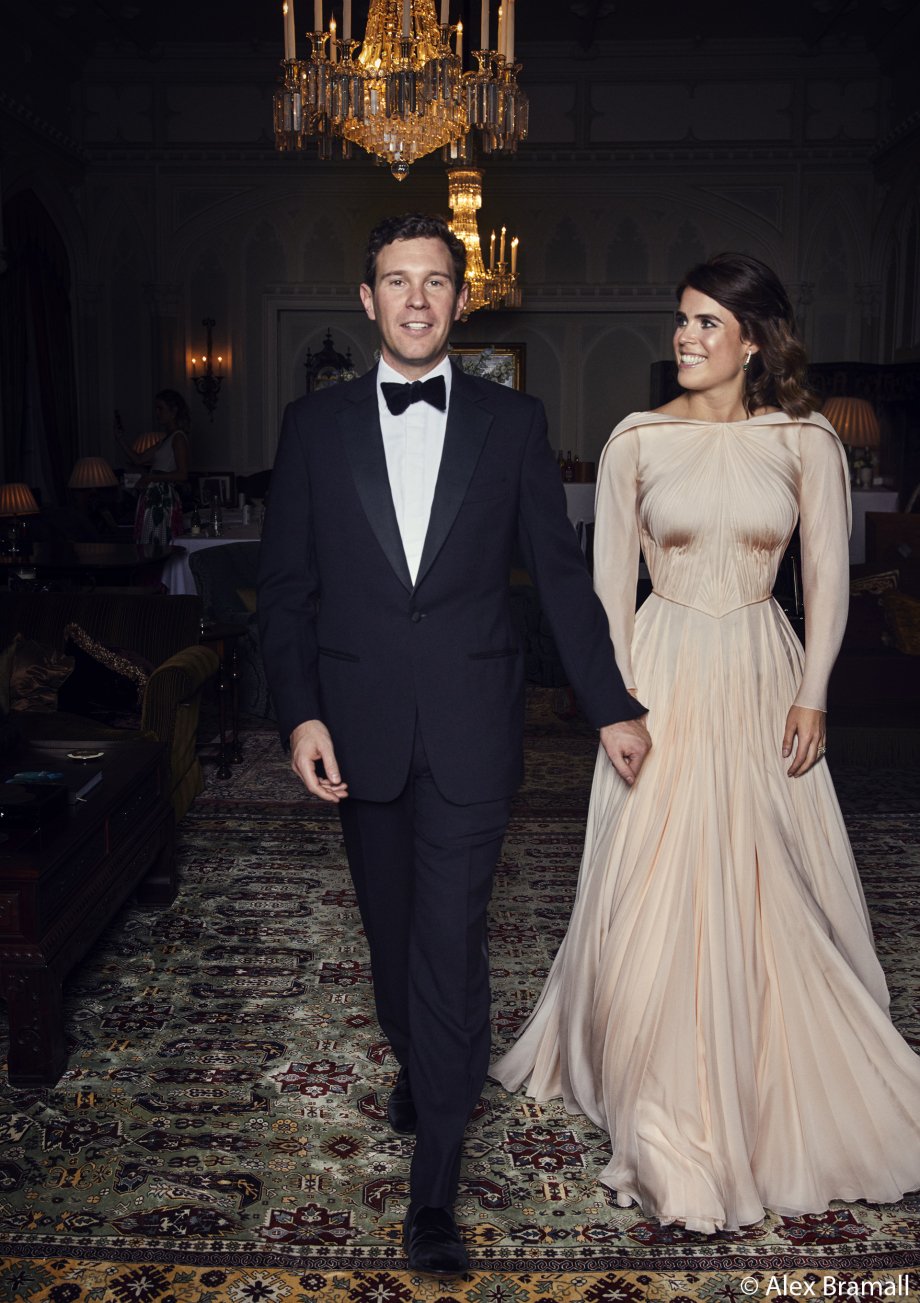
The reception, following their nuptials at St. George’s Chapel, followed a festival theme featuring live music, gourmet dining, and fairground rides, according to reports. We got a glimpse of this from the couple’s evening do photo on the day and more of the drawing room.
Controversies at Royal Lodge
However, Prince Andrew’s continued occupation of Royal Lodge became the subject of scrutiny after stepping back from public duties in 2019, following his controversial BBC Newsnight interview about his connections to Jeffrey Epstein.
In 2022, his official patronages and affiliations were removed, and discussions arose regarding his continued residency at Royal Lodge.
It was rumoured for a few years after this that Charles III encouraged his brother to vacate Royal Lodge, due to financial constraints and a reallocation of royal properties, especially in the context of the repairs needed to the house.
However, Andrew has reportedly refused to leave and – until early 2026 – continued to reside there with his ex-wife, Sarah Ferguson.
In October 2025, it was revealed that Andrew paid only peppercorn rent at the property, which seems to have spurred The King on to evict his brother, breaking the 75 year lease that Andrew signed in 2003. This means he would legally be entitled to financial compensation from his brother, but it is unclear if this will be enforced.
The rents paid by members of the Royal Family are now to be subject to Parliamentary scrutiny.