

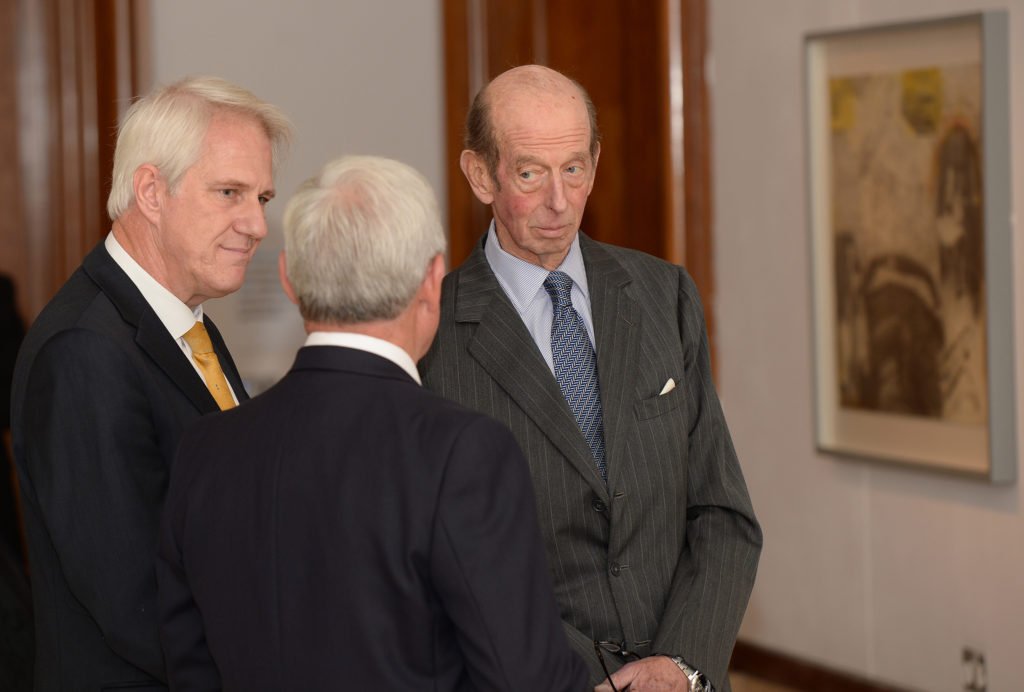
The Duke of Kent is a working member of the Royal Family who is not all that well-known and often overlooked in the media.
So who is he and what type of patronages does he support?

Who is The Duke of Kent?
The Duke of Kent was born Prince Edward George Nicholas Paul Patrick on 9th October 1935. He arrived into the world at 3 Belgrave Square, near to Buckingham Palace, which was the Kent family home.
He is the eldest child of Prince George, Duke of Kent – the younger brother of George VI (Elizabeth II’s father) and Edward VIII – and his wife, Princess Marina, who herself was a daughter of Prince Nicholas of Greece, and therefore a first cousin to both the late Queen and the late Duke of Edinburgh.
Prince Edward is elder brother to Prince Michael of Kent and Princess Alexandra.
In 1942, Edward’s father, Prince George, Duke of Kent, died in a wartime flying accident near Caithness in Scotland, while on active duty. The Dukedom then passed to Edward, who was a few months away from turning seven at the time.
In 1961, The Duke of Kent became engaged to Miss Katharine Worsley. Their wedding took place in York Minster on 8th June that year.
The Duke and late Duchess of Kent had three children: George, Earl of St Andrews; Lady Helen Taylor; and Lord Nicholas Windsor, and ten grandchildren.
Embed from Getty Images Embed from Getty Images
Military career
Aged 18, Prince Edward joined the Royal Military Academy Sandhurst, where he was awarded the Sir James Moncrieff Grierson prize for foreign languages, and in turn, qualified as a French interpreter. The Queen’s cousin served in the Armed Forces in the UK and overseas for 21 years:
Here’s a breakdown of his service:
- 1962-1963: regimental tour in Hong Kong
- 1966: attended the Army staff course and then served on the staff in Eastern Command in India
- 1970: commanded a squadron of his regiment serving in Cyprus as part of the United Nations force
- 1976: retired from the Army with the rank of Lieutenant-Colonel
- 1993: promoted to Field Marshal by his cousin, Elizabeth II
Royal work
The Duke, now 90, is regularly seen at royal events such as Trooping the Colour and Remembrance Day Services. He stood next to Elizabeth II during the 2022 Trooping celebrations to mark the Platinum Jubilee.
He has also represented the late Queen on a number of overseas occasions, such as the independence celebrations in Sierra Leone (1961), Uganda (1962), Guyana (1966) and The Gambia (1965).

The Duke returned to Uganda in 2012, as part of the celebration of The Queen’s Diamond Jubilee. The visit also marked the 50th anniversary of Uganda’s full independence from the UK.
Prince Edward was also the first member of the Royal Family to make an official visit to China.
While slowing down in his older years, he is involved with over 140 different charities, organisations and professional bodies which cover a wide range of issues, from commemorating the war dead, to fostering the development of British technology and industry.

Edward also had a close affiliation with the All England Lawn Tennis and Croquet Club – aka Wimbledon – serving as its President for over 50 years, presenting trophies on more than 350 occasions, before retiring in 2021.
It was in 1969 that the Duke made his first appearance as President, presenting the trophies to Rod Laver and Ann Jones.
On stepping down as President of the AELTC, The Duke of Kent said: ‘It has been an honour to serve this remarkable institution for as long as I have. To have seen this tournament, and the game of tennis, grow and inspire generations over the span of five decades has been an extraordinary experience, and I am incredibly proud to have been part of it.
‘I look forward now to watching as the young players of today pursue ever higher standards of excellence, and I shall continue to cheer them on as they do.’
?? This weekend would have been the @Wimbledon Finals, during which The Duke of Kent, President of the All England Lawn Tennis and Croquet Club, normally presents the champions with their trophies.
The Duke has been President of the AELTC since 1969. pic.twitter.com/M2fckGkd48
— The Royal Family (@RoyalFamily) July 11, 2020
The Duke is passionate for future generations to learn and remember the sacrifice made by so many during the conflicts of the First and Second World Wars. He has been President of the Commonwealth War Graves Commission since 1970.
Some of the other charities that the Duke supports include:
- Blood Cancer
- British Computer Society
- Canterbury Cathedral Trust
- The Imperial War Museum
- Kent County Cricket Club