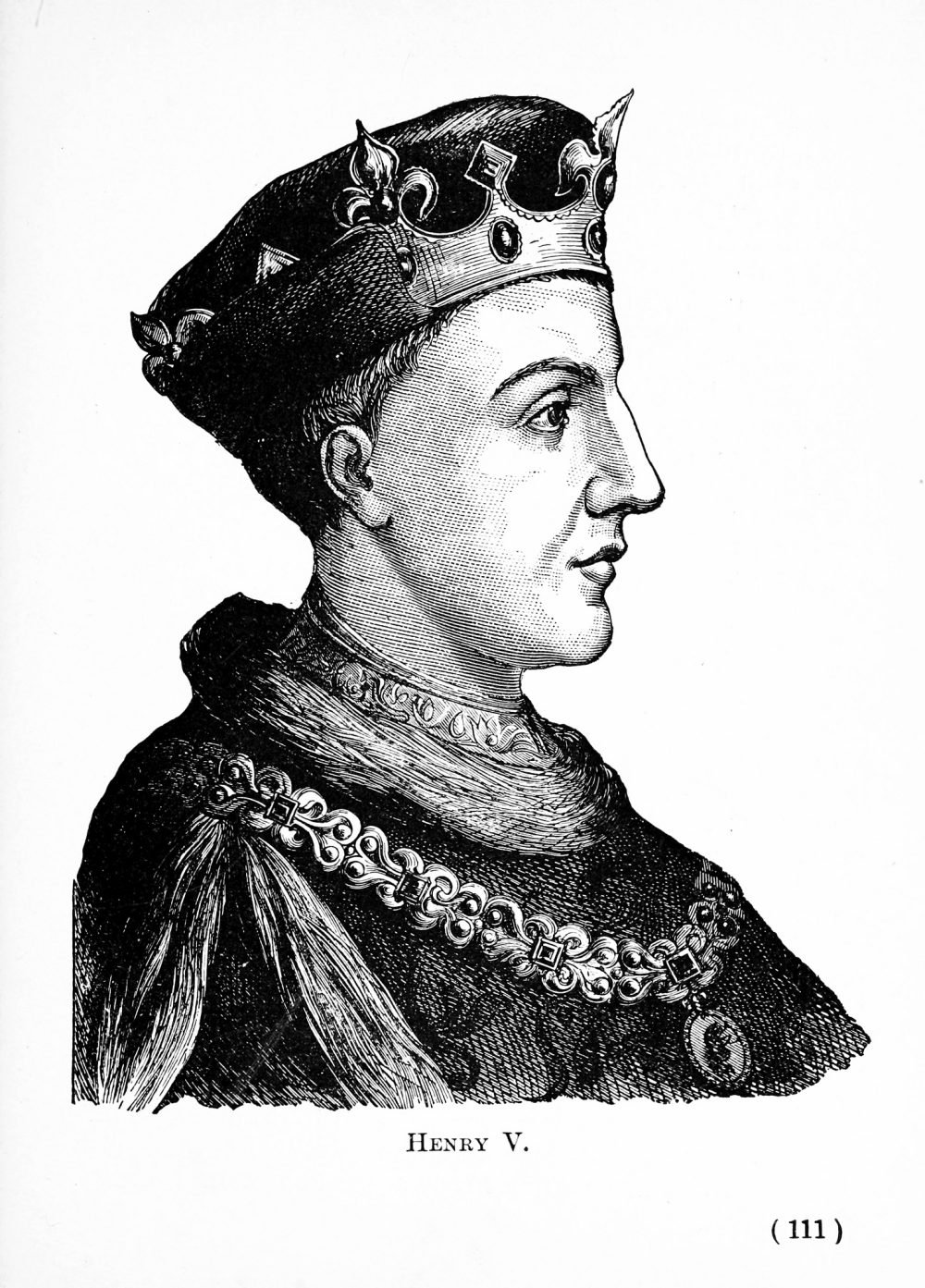
A Crystal Sceptre – given by Henry V to the City of London after the victory at the Battle of Agincourt – is to go on display at the Guildhall Art Gallery, London.
It has been seen by very few people in its 600-year-history, as the sceptre lives in the City’s iconic Guildhall, only leaving its home for coronations, and to swear in a new Lord Mayor.
Henry V, victor at Agincourt, wanted to thank the capital for its support in the war. The City of London, a corporation in its own right, loaned 10,000 marks – worth £3 million pounds in today’s money – and the King gave his funders the Crown Jewels as a guarantee.

Agincourt is considered one of the great military victories in English history: around 8000 archers and men-at-arms took down a French side up to five times larger that itself, in 1415 during the Hundred Years’ War.
English casualties were minimal compared to some 8000 French. Since this date, Monarchs have been known as ‘King/Queen of England and France’.
It is thought the crystal sceptre was given in February 1421, making it almost 600-years-old.
The earliest mention of the sceptre is in a painting of the coronation of Catherine of Valois, Henry V’s wife, in Westminster Abbey: the Lord Mayor of London is shown holding the sceptre by his side.
Experts say, rather ironically, the 17-inch carved rock-crystal stem was likely made in Paris, inlaid with gold. Gems were imported from across the globe to decorate the piece, with red spinels from modern Afghanistan, sapphires from Sri Lanka, and pearls from the seas of the Arabian gulf, which were traded in Cairo.
The story of the rod was only uncovered when Dr Michael Hall, an art historian, began researching the art of Mansion House (the residence of the Lord Mayor) with Dr Clare Taylor, and Lady Gifford (wife of the former Lord Mayor, Sir Roger Gifford).
Dr Hall said: ‘As an object it is remarkable in many ways. It was given in recognition of London’s assistance to the King at one of the turning points in English history and the fact that it has survived intact all these years is truly amazing.’
The sceptre was nearly sold off down during Oliver Cromwell’s Interregnum, like the Crown Jewels, though it appears City representatives hid it.
In the Great Fire of London, 1666, the Lord Mayor, Sir Thomas Bloodworth, prized his possessions over keeping his city safe – he sent his things, including the Crystal Sceptre, out of the inferno.

The exhibition, entitled ‘Unveiling the crystal Sceptre: Henry V’s Gift to the City’, will begin on 24 October.
This is the day before St Crispin’s Day, when, almost six centuries ago, English soldiers engaged as many as 36000 French at Agincourt.
Also on display will be a silver gilded iron mace used in the battle, presented by Henry V to the village of Hedon, on the Humber.
Katty Pearce, curator at the Guildhall Gallery, said: ‘This is a unique opportunity to get a close look at something with such a rich heritage that has rarely been seen before.’
She added: ‘Because of the 600th anniversary of the battle there is a heightened awareness of the importance of Agincourt at the moment, and the story of Henry V is part of our national consciousness. This is a beautiful object that connects us to that national story.’
Entrance to the exhibition is free, and it runs until 3rd December.