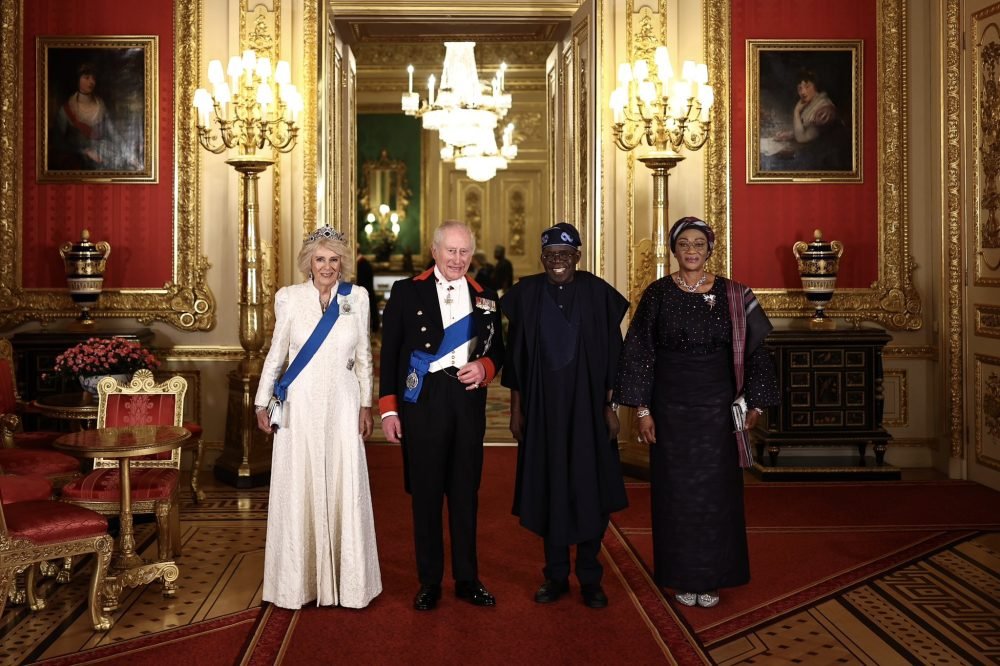
As per tradition with State Visits, The King and Queen hosted a State Banquet in St George’s Hall at Windsor Castle for the Nigerian President and First Lady.
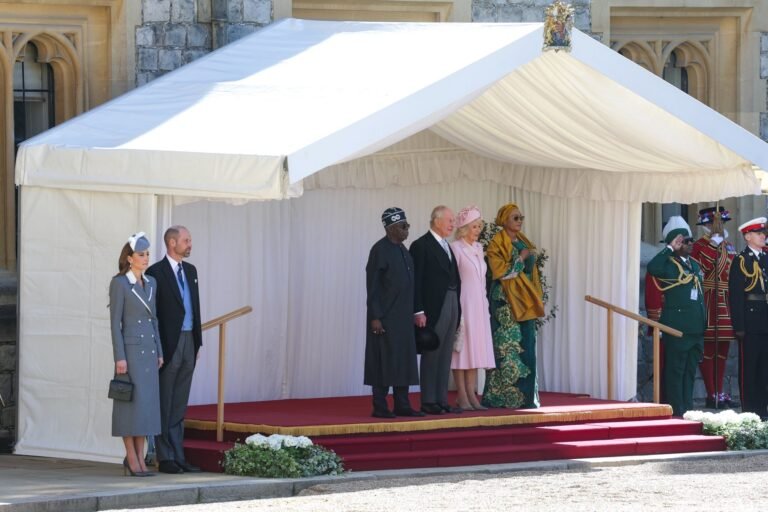
The Banquet comes after a day filled with pomp and pageantry at the Castle.
Queen Camilla wore a cream embroidered gown by Fiona Clare, paired with the Belgian Sapphire Tiara and a diamond serpent necklace from her own collection.
Meanwhile, The Princess of Wales wore a green dress by Andrew Gn, the Lovers Knot Tiara and earrings once belonging to the late Queen.
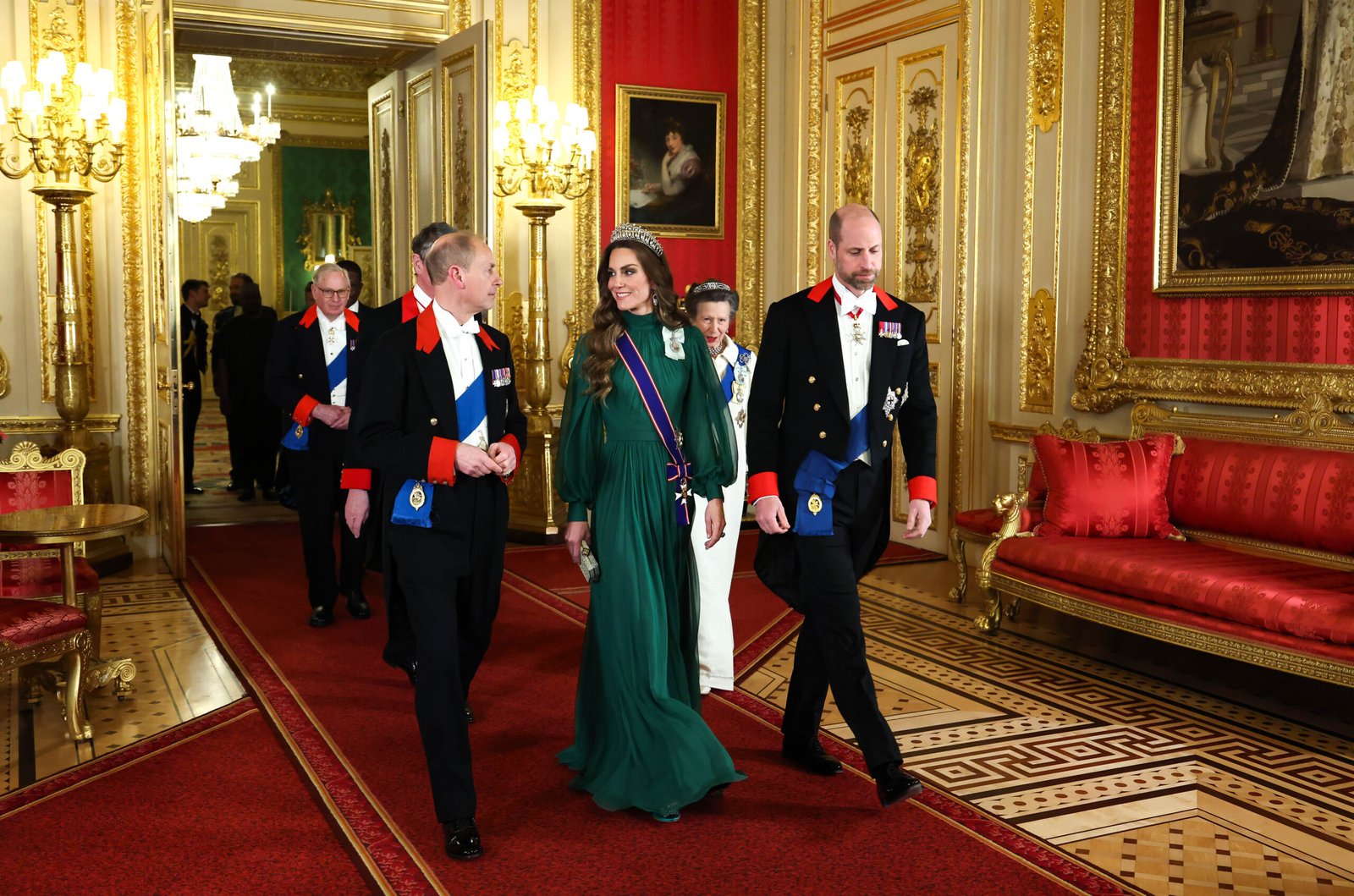
More sparkles were seen during the evening with The Princess Royal wearing her Meander tiara, The Duchess of Gloucester wearing Iveagh Tiara. Female royals were also seen wearing the Royal Family Order of Charles III.
During his speech, The King said he was grateful for the President travelling during “this holy month” which is “no small sacrifice” with the President observing Ramadan.
The speech touched upon the conflict between Muslim and Christian communities in Nigeria, but noted how he and the President “witnessed one such example of how we are learning from one another when we met leaders of the Christian and Muslim communities”.
“The gathering was a deeply meaningful symbol of what Nigeria has long shown: that people of different faiths can, do, and must live alongside one another, in peace, in harmony and in shared purpose.
“It was also a timely reminder of the importance of standing with you – and in us strengthening your Quick Reaction Forces, or in providing food, nutrition and protection services in Northern Nigeria – when challenges disturb the age-old balance between these communities”.
His Majesty’s speech also acknowledged the “painful” aspects of the shared history between the two countries, but did not go as far as offering a formal apology. He stated that “there are chapters in our shared history that I know have left some painful marks” and that he did “not seek to offer words that dissolve the past, for no words can.”
Instead, the King highlighted the importance of looking forward, adding that history should be seen as “a lesson in how we go forward together to continue building a future rooted in hope and growth for all.”
The speech focused on partnership and shared progress rather than accountability and praised his guest’s country as a “nation of over two hundred and thirty million people” with “energy, ingenuity, ambition and resolve”.
While the King’s did acknowledge the complexity of Britain’s colonial past in Nigeria, his decision not to apologise will likely draw criticism from some as Nigeria has called for reparations through official and legal channels and has been positioning itself as a leader in a growing movement.
Prior to dinner, canapés were offered to provide sustenance to Muslim guests who were unable to partake in iftar (the breaking of their fast) earlier at sunset.
Tonight’s menu consisted of a starter of a soft‑boiled quail egg tartlet with watercress and kale and a basil sabayon. The main course consisted of fish a fillet of turbot, lobster mousse wrapped in spinach, beurre blanc sauce, sprouting broccoli with Hollandaise sauce, fricassee of peas and broad beans, and Jersey royal potatoes. The dessert consisted of an iced blackcurrant souffle with red fruit coulis.
Drinks at the banquet included a mocktail inspired by a classic Nigerian beverage, an after-dinner cocktail – which is a twist on the classic Nigerian drink called the Chapman – and wine. Non alcoholic drinks were also available, with the President making his toast with orange juice.
The flowers featured on the table included handpicked seasonal flowers and foliage from the gardens at Buckingham Palace, Windsor Castle and The Savill Garden in Windsor Great Park.