

Elizabeth Stuart, Queen of Bohemia faced many trials during her life but her legacy is paramount as Beverley Adams discusses
★★★★ rating
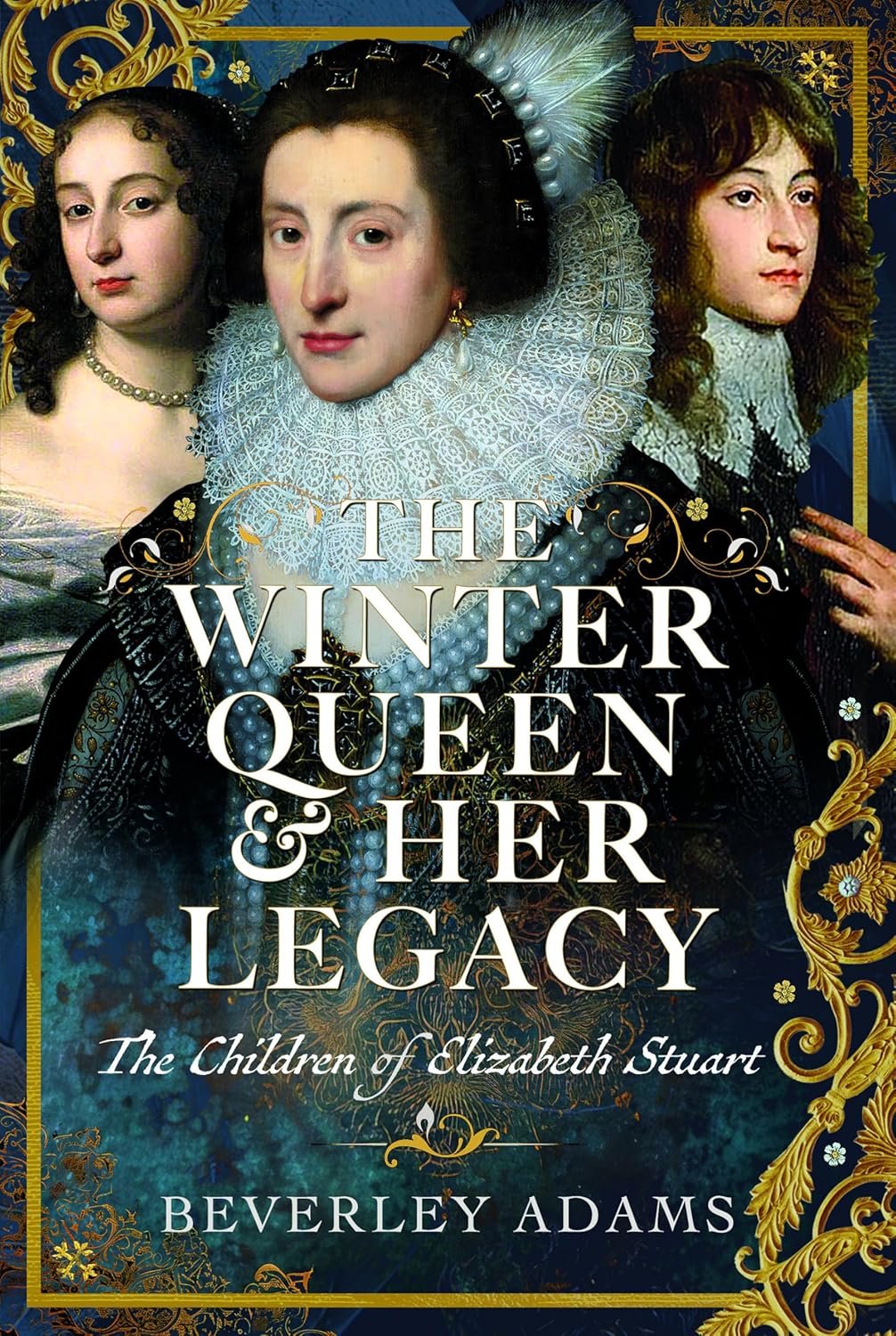
The Winter Queen & Her Legacy: The Children of Elizabeth Stuart
is a historical biography, placing Elizabeth Stuart at the centre of European politics in the 17th century. The book, published by Pen & Sword, follows Elizabeth’s early life as the daughter of James VI & I, through to her marriage to Frederick V, Elector Palatine, to her death in the court of her nephew, Charles II.
The book’s main message is legacy and that Elizabeth’s importance should be measured by the familial consequences of her life and family and not by the collapse of the Bohemian crown and her own life’s events. Elizabeth’s husband, Frederick, was a Calvinist Protestant had been offered the crown of Bohemia after they deposed of their Catholic King, Ferdinand.
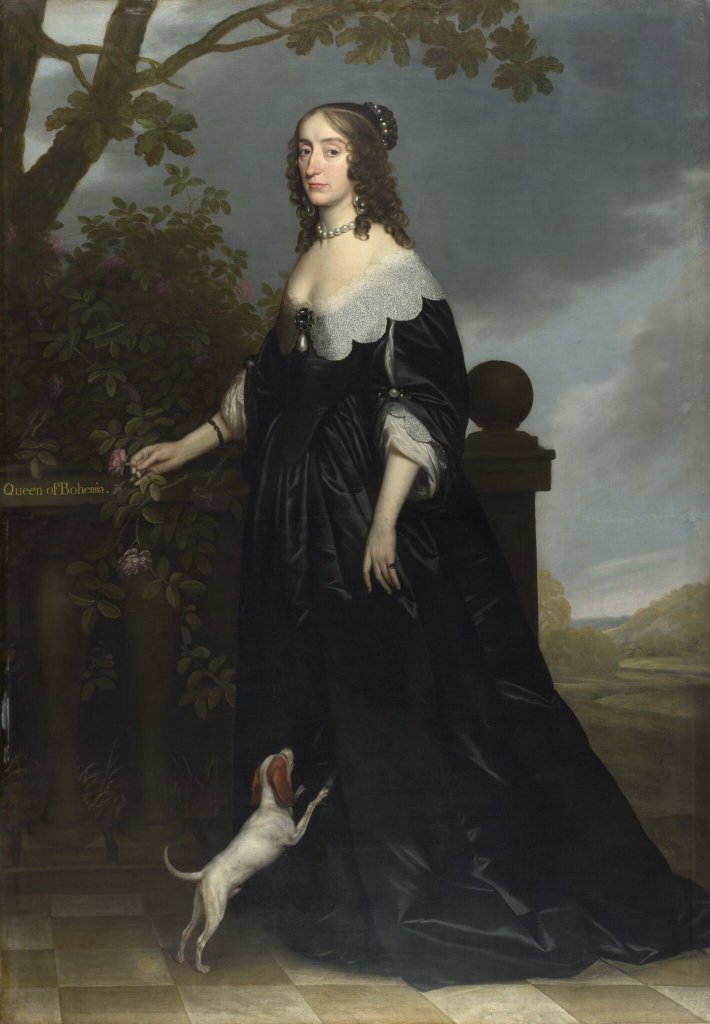
Ferdinand brutally persecuted of Protestants, so Frederick was crowned in November 1619 and Elizabeth was crowned a few days later as his consort. The reign had started well but it was to only last a year…
Bohemia was central to Habsburg security and counter-reformation goals. Ferdinand, now Holy Roman Emperor, Ferdinand II, refused to give it up. Frederick’s reign ended when his army was defeated at the Battle of White Mountain in November 1620, and so his family then went into exile in The Hague. This gave Habsburg control back and ended the first phase of what would be one of the bloodiest wars in history – the 30 Years’ War.
What started as a civil war in the Holy Roman Empire drew in other countries, such as Spain, Sweden and France based on their religious affiliations. The focus of the war also changed from a religious fight to a political fight for power and territory in Europe. Elizabeth and Frederick are remembered as the winter King and Queen not only for their brief reign, but also due to the season of their final battle.
Author Beverley Adams discusses Elizabeth’s trials and tribulations throughout her life in Europe, as she tried to regain her husband’s titles and survive the grief of losing six children, three of whom died in childhood.
One of the main themes in the book is how Elizabeth set up alliances with other countries to help her try to reclaim Bohemia. At the end of the book, after Elizabeth’s death, the reader gets small biographies of the children that survived into adulthood. This shows where her legacy reached throughout Europe and one of those places was into the political future of Britain: it was the Hanoverian succession that brought George I to the British throne, via her daughter, Sophia.
But the core focus is on how during her life, she was already – intentionally or unintentionally – creating that legacy.
The book has a wide historical scope, covering Elizabeth’s parents – James I and Anna of Denmark – before they married, through to Elizabeth’s death. The author portrays Elizabeth as a resilient political leader, who had to navigate exile, dynastic ambitions and family responsibilities. She is not only shown as Queen of Bohemia or the daughter and sister of British Kings, but as a mother and strategist whose descendants helped re-shape the British Monarchy.
This is seen through the positioning of her sons in the military. For example, Prince Rupert of the Rhine was in active service for Protestant and royal causes. Rupert was involved in the English Civil War and became an established member at the English Court due to his military expertise. The German Prince (and Charles II’s cousin) was a natural solider, which Elizabeth helped to shape, and he was one of her most well-known children.
Elizabeth also stayed in contact and wrote many letters to Kings, Generals and other important people across Europe asking for help. She used her status as a Stuart Princess to help her with this. Who would ignore an English Princess?
However, the book shows that although she made alliances they sometimes backfired: for decades she fought for her family’s inheritance in Palatine, and thought when her eldest son, Charles Louis, was restored as Elector Palatine by the Treaty of Westphalia in 1648, her troubles would be over. This was not the case, as Charles Louis distanced himself from her and refused to give her any properties, leaving her in poverty in The Hague.
Adams also shows that while she continued to regain her husband’s titles and lands, some of her children received her wrath as they failed to follow the plans she had laid out for them. Her daughter, Louise Hollandine, was omitted from her mother’s will as she converted to Catholicism and became a nun, instead of marrying a suitor her mother approved of. Louise had created a plan to sneak out in the middle of the night and then made her way to Antwerp…
Elizabeth’s son Edward also converted to Catholicism to marry his bride, which incurred Elizabeth’s wrath. She said she would rather strangle her own children than have them convert to Catholicism, which might help you understand the deep feeling the 30 Years’ War created.
The book covers a large family network and a complex period of European conflicts. Due to this, one drawback of the book is that it can be hard to keep up with the range of names, titles, political developments and various battles during the 30 Years’ War! I had to use Google as I read, to make sure I was understanding everything correctly.
The book also has some grammatical and spelling errors, as well as a date error which surprised me. The spelling and grammatical errors are very noticeable, which makes me question the book’s quality and editing. The date error is a typo as it says the birth of Elizabeth’s son, Edward, is October 1624 but it should be October 1625. This confused me as just before Edward’s birth is mentioned, the book mentions the birth of her son, Louis, in August 1624, which meant the dates did not add up correctly. Overall the content of the book is good but the proofing and editing lets it down.
Adams has succeeded in her aim of highlighting the interconnected nature of European royal families. The book shows how the Stuart descendants became woven into the political fabric of numerous European states, influencing events far beyond England and Scotland. This broader perspective is able to help readers understand why Elizabeth Stuart, granddaughter of Mary, Queen of Scots and grandmother to George I, remains an important historical figure despite her famously short reign in Bohemia. She is important as she not only married most of her children strategically but she never gave up the fight for what she believed was her husband and her children’s legacy.
The book has expanded my own knowledge of that time period in an easy-to-read way. I knew very little about Elizabeth Stuart before reading this book and now I feel I know her – her resilience and and how she held herself while fighting for her children, even if it meant disagreeing with her father and brother. Or if it meant going bankrupt after selling her jewellery to help pay for her son’s army.
Through all of her trials, she was doing what she felt best for herself and her family.
Overall, Adams, has shown a convincing depiction of a Royal Family whose legacy has shaped not only British but European history for generations.