
Oman’s efforts to keep the Strait of Hormuz open drew public praise from The King last night, at a State Banquet speech that closed the first day of the first Omani state visit to Britain since 1982.
Charles rose to speak – wearing the Omani order his guest had presented to him a few hours earlier – and the subject was noticeably more serious in tone that many banquet speeches: the Strait of Hormuz.
The King praised Oman’s ‘noble efforts’ to keep one of the world’s most important shipping routes open, and paid tribute to the Sultanate’s standing as a ‘trusted interlocutor to all parties’ at a moment when conflict has returned to the region.
Hormuz is the narrow sea passage at the mouth of the Gulf through which a large share of the world’s seaborne oil travels, and Oman holds its southern shore. It is also why a nation of around five million people is treated in the UK and US as an indispensable go-between, rather than a minor partner.
The traditional escort
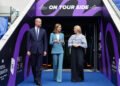
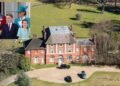
The day started unusually, with Sultan Haitham bin Tarik Al Said collected by Prince William from his own home in London, Grove House in Regent’s Park.
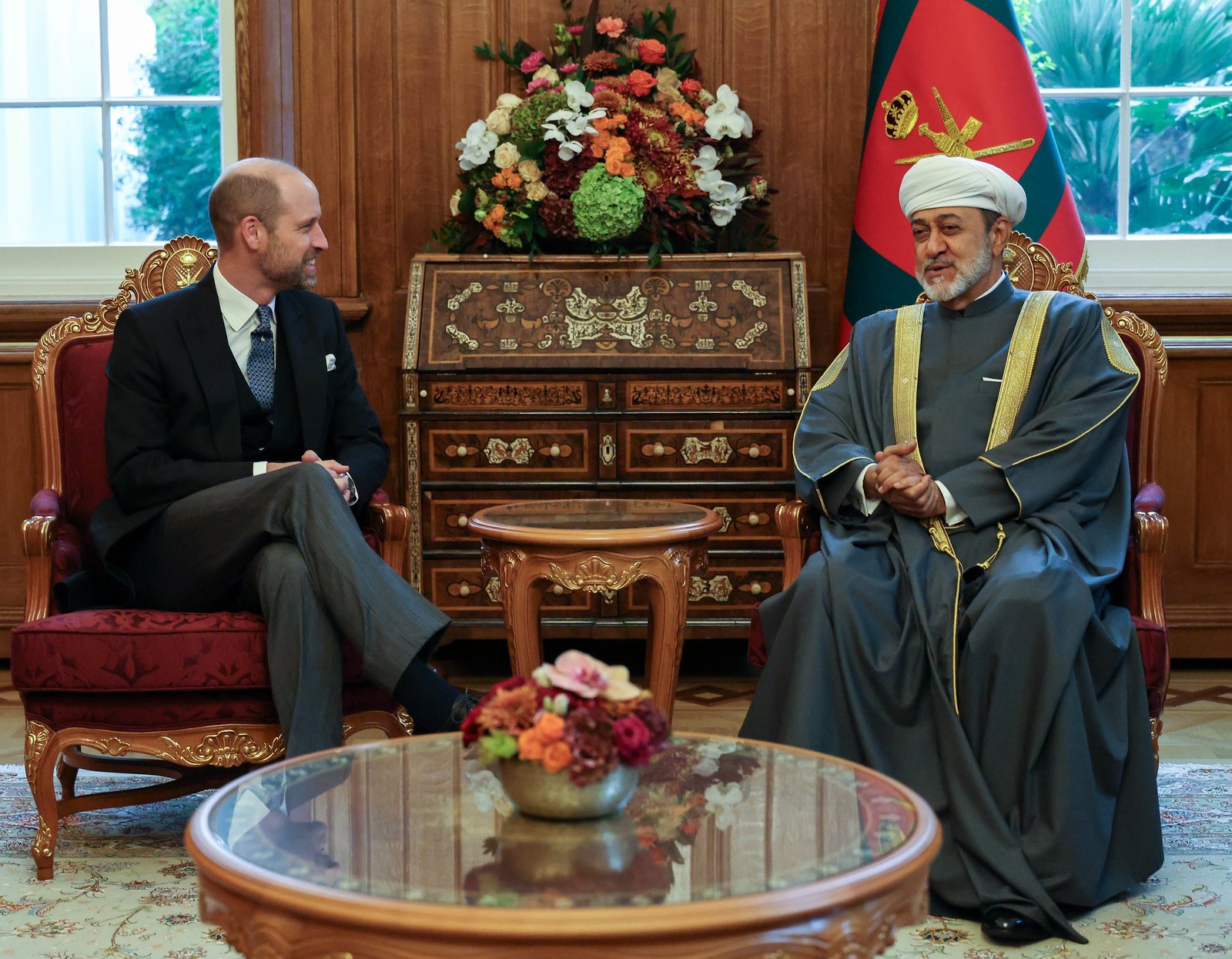
The Prince of Wales greeted him on The King’s behalf before travelling with him to Windsor, rather than the normal hotel or airport pick up.
Sending the heir to perform the first greeting is long-standing practice: the Monarch receives the guest formally, and the heir escorts them to the meeting. It is an important part of the choreography of a State Visit that reminds a visiting Head of State that they are being welcomed with appropriate respect.
The ceremonial welcome at Windsor
The King and The Queen were waiting at the Royal Dais on Datchet Road, together with The Princess of Wales.
Camilla and Catherine chose red and green respectively, perhaps reflective of the Omani flag colours.
A Royal Salute was fired at Home Park in Windsor and at the Tower of London, the customary artillery salute marking the formal arrival of a foreign Head of State, and the Omani national anthem was played before the party moved off.
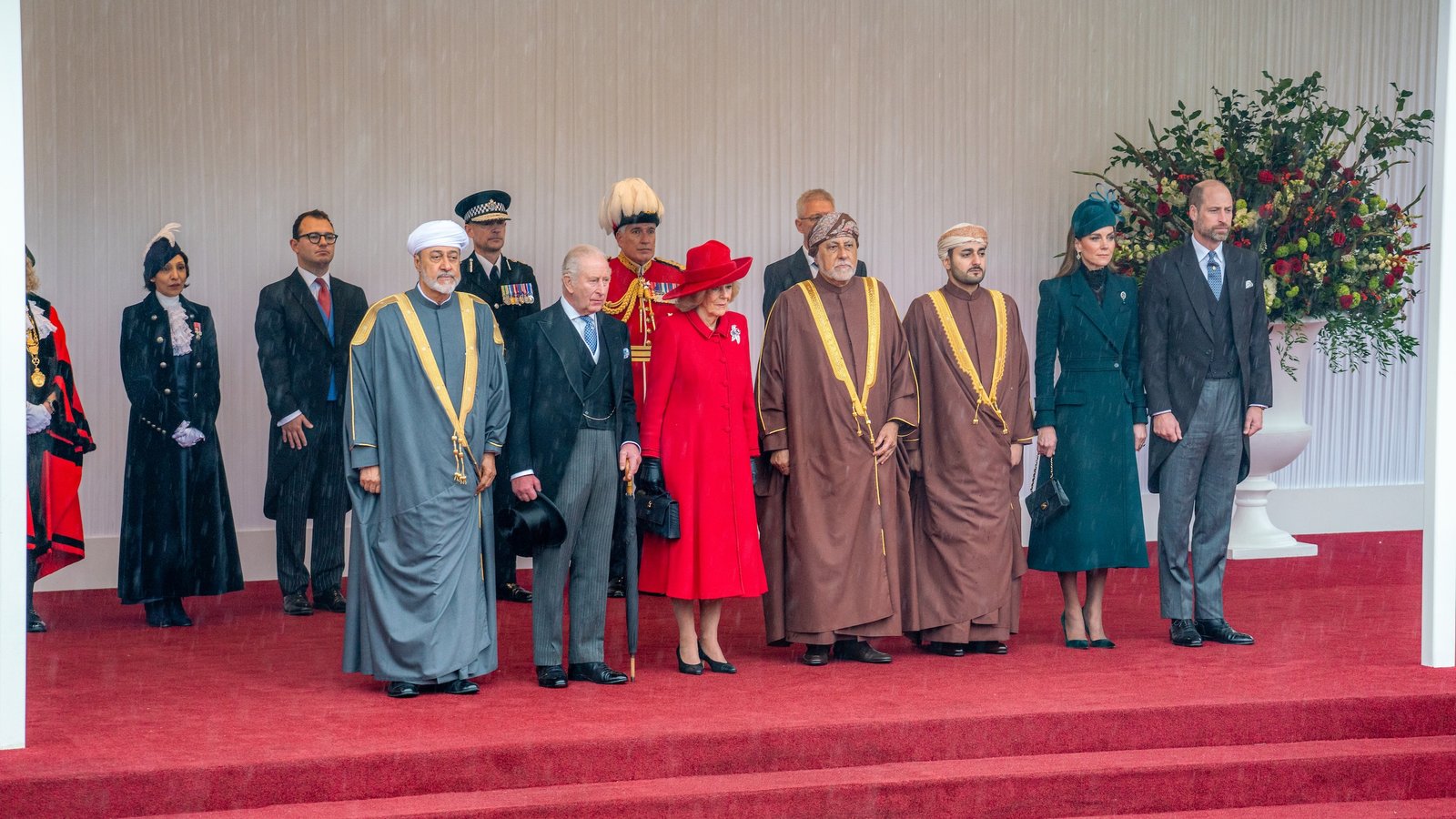
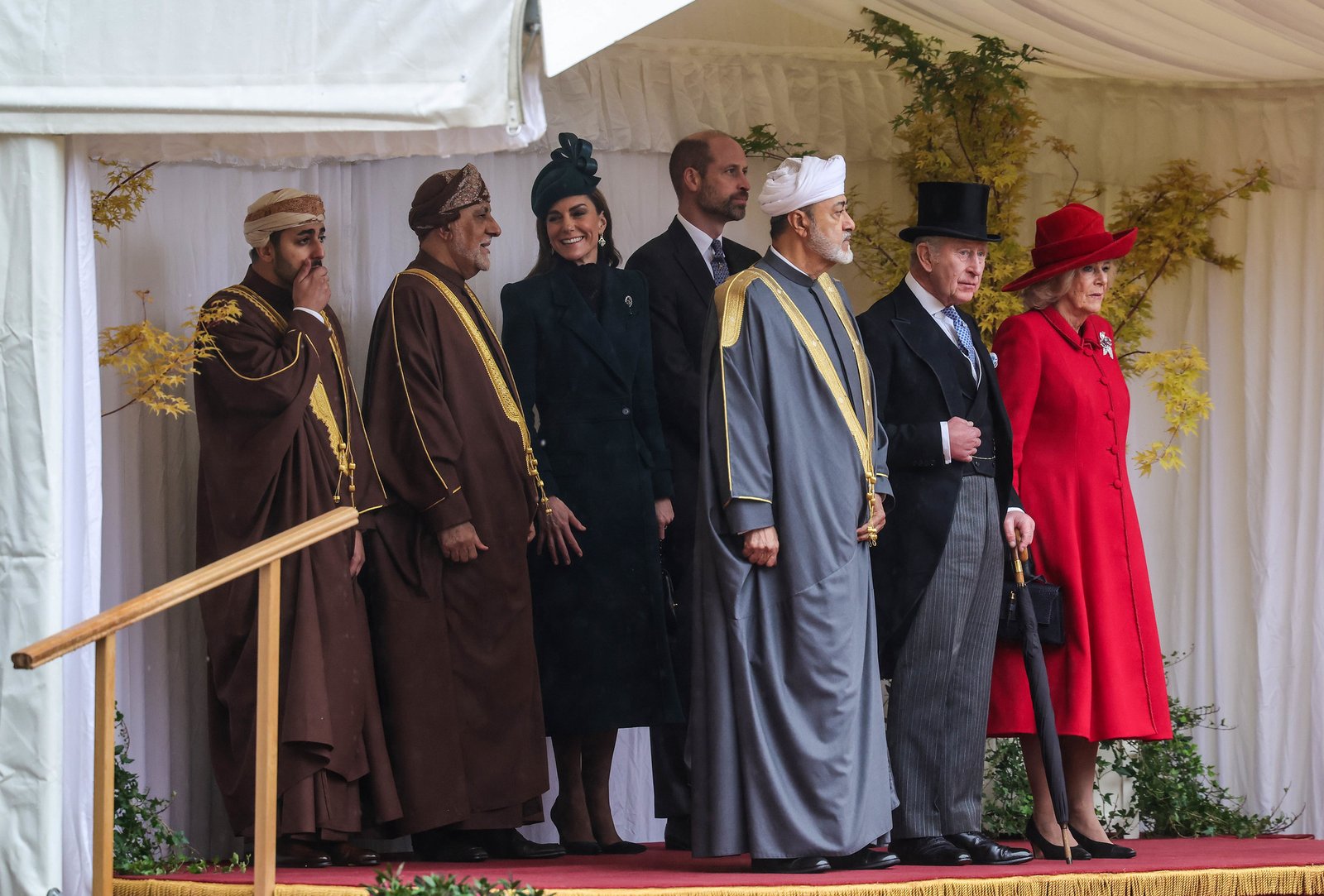
It rained throughout – but no one used an umbrella! The King and the Sultan travelled together in the Irish State Coach, while The Queen followed in the Scottish State Coach with Sayyid Shihab bin Tariq Al Said, Oman’s Deputy Prime Minister for Defence Affairs.
A Sovereign’s Escort of the Household Cavalry accompanied the procession along Datchet Road, Thames Street, the High Street, and Park Street, before it passed through Cambridge Gate and the George IV Gateway into the Quadrangle, with members of the Armed Forces lining the route.
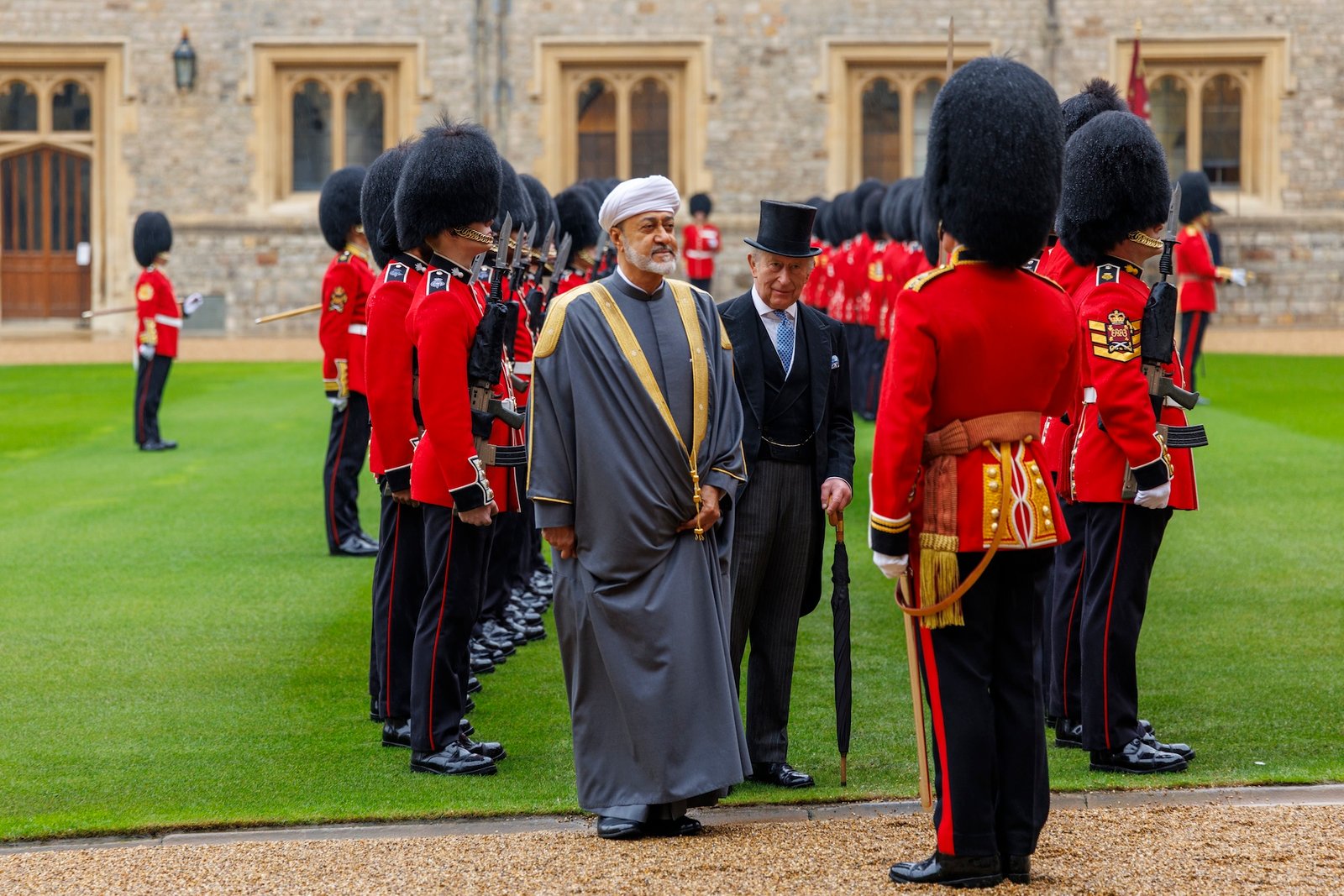
In the Quadrangle, a Guard of Honour formed by Nijmegen Company Grenadier Guards and F Company Scots Guards gave a Royal Salute, and the Band of the Scots Guards played both Omani and British national anthems.
Omani items and history in the Royal Collection
After lunch in the State Dining Room at Windsor Castle, attended by members of both Royal Families, King Charles and Queen Camilla took their guest into the Green Drawing Room to see a specially curated display of Omani material from the Royal Collection.
This is a fixture of every state visit and acts as a way to document the often long-standing relationship between the UK and the visiting country, a physical record of their diplomacy.
Embed from Getty Images Embed from Getty Images
The Duke and Duchess of Edinburgh were present for the viewing.
The Sultan also presented The King with the Order of Al Said, Oman’s highest decoration, which Charles wore to the banquet that evening.
It is the same honour Sultan Qaboos bestowed on the late Queen during the last Omani state visit, in 1982.
Dining in style
The banquet seated 160 guests in St George’s Hall, among them Queen Camilla, William, Catherine, The Princess Royal, and The Duke and Duchess of Gloucester. Andy Burnham was attending his first state banquet.
Catherine was in a yellow Elie Saab gown and the Lovers’ Knot tiara, while The Queen debuted a new amethyst necklace with the Girls of Great Britain and Ireland tiara. Anne chose the Meander Tiara, while Birgitte was in the flexible Gloucester Honeysuckle headpiece.
Embed from Getty ImagesEmbed from Getty Images Embed from Getty Images
The men were in white tie, and for the royal men, the Windsor Uniform – a dark blue jacket with red collar.
The tables were decorated with elaborate candelabra, an array of glasses at each setting, alongside pomegranates harvested from the Windsor gardens and salt stamped with The King’s cypher.
Food for the night went as follows:
- Croute of Scottish Langoustine and Cornish Crab with Avocado, Tomato consommé, and Celery
- Pot Roasted Windsor Pheasant with Spiced Quince, Stuffed Cabbage and Braised Fondant Potatoes in a Dijon Mustard Sauce; Selection of assorted seasonal vegetables
- Individual Baked Alaska with Balmoral Plum and Windsor Estate Honey Ice Cream
plus a Tattinger champagne from 1998.
Replying to the toast, the Sultan set out his country’s foreign policy in a phrase: Oman, he said, has chosen ‘a different path, an independent path’.
Embed from Getty ImagesEmbed from Getty Images
Why the speech matters
A speech of this kind is not a personal statement. State visits are arranged at the request of the government, and the Monarch’s remarks are agreed with the Foreign, Commonwealth and Development Office. That means that Charles’ comments are effectively British foreign policy, just delivered by the Head of State rather than by a minister.
What the Crown adds to it is continuity. Governments change, and Gulf partners have watched a good many British ministers come and go.
The King has been meeting Omani rulers for decades; he visited the Sultanate several times as Prince of Wales, and hosted Sultan Haitham privately at Windsor last year. He made the point himself, describing ‘a living relationship being passed from one generation to the next’, a line that applied equally to the new Sultan, to The King, and to William.
The state visit continues for two further days, with more engagements expected.