


Would it surprise you to learn that Buckingham Palace was once the site of marsh lands and a lost river?
These lands were leased to many people ranging from Edward the Confessor, to the monks of Westminster Abbey, to finally being back in royal hands during the reign of Henry VIII. This once-bare land is now the centre point of the British Monarchy hosting concerts, investitures, garden parties and state banquets – up to 50,000 guests.
Learn more about its diverse history, or take a look inside Buckingham Palace today, here.
Buckingham Palace pre-1624
The site of what is now Buckingham Palace formed part of the Manor of Ebury: 500 acres of marshland and farmland which was owned by Edward the Confessor in Saxon times. It was gifted to Geoffrey de Mandeville by William the Conqueror; de Mandeville then bequeathed it to the monks of Westminster Abbey.
The land was wet from the river Tyburn, which continues to flow beneath the courtyard and south wing of the palace today!
In 1536 with the Dissolution of the Monasteries, Henry VIII took Ebury from the monks to use as hunting grounds. These grounds are now Hyde Park and St James Park today. St James’s Palace was first used as a hospital (the Hospital of St James) between 1531 and 1536.
Although it was royal land, it was never lived on, as seen by James I selling part of the Crown freehold. He sold it in 1623 to raise short-term money for the Crown. The manor of Ebury was an estate with a large house further south in Belgravia, rather than where Buckingham Palace is today.
He retained part of the site, where he had built a four-acre mulberry garden to rear silkworms in 1609. Unfortunately, he selected the wrong kind of mulberry bush and silk production never took off in Britain… One of his many failed schemes to raise money to compensate for his profligate spending!
The palace under Charles I to George III
Charles I sold the rest of the estate in 1628. The first house erected on the site belonged to William Blake, a Jacobean gentleman, not the poet we are familiar with today. He built a grand 17th-century Jacobean style brick house on the site, which was the first residential structure on what is now Palace grounds.
After Blake, the next owner was George Goring, 1st Earl of Norwich, who was a prominent English courtier, politician and Royalist military commander.
Goring extended the house which then became known as Goring House and laid the foundations for today’s Palace gardens, but he defaulted on rent payments which led to Henry Bennet, 1st Earl of Arlington occupying it. Arlington was an English politician and army officer who became one of Charles II’s key advisors in 1668.
This led to the construction of Arlington House, an elegant Anglo-Dutch style mansion built over the ruins of Goring House.
It is widely commented that during the construction of Buckingham House in the early 1700s, Arlington House was demolished. However, rather than digging new foundations, the existing walls and ground were used, which today is the Southern Wing of the palace we recognise (the side of the King’s Gallery).
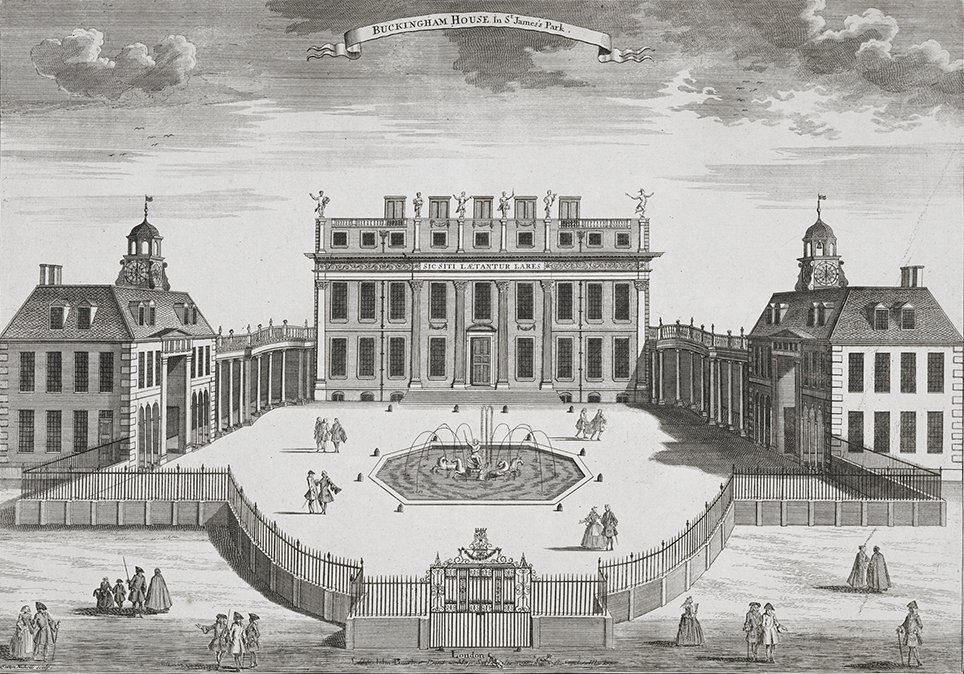
Buckingham House was built in 1703 after John Sheffield, Duke of Buckingham and Normanby, acquired the lease in 1698 during the reign of William III (his wife and co-Monarch, Mary, had died a couple of years before). The house was a large central block with three floors and two small service wings designed by William Winde.
George III then bought the house in 1761 for £21,000.
Georgian royal home 1761-1837
George III bought the house for his wife Queen Charlotte and it was then known as The Queen’s House.
In 1775, an Act of Parliament legally made Queen Charlotte the owner of the property in exchange for her rights to Old Somerset House (the same location as today’s), which was nearby.
14 out of 15 of George and Charlotte’s children were born at the new residence.
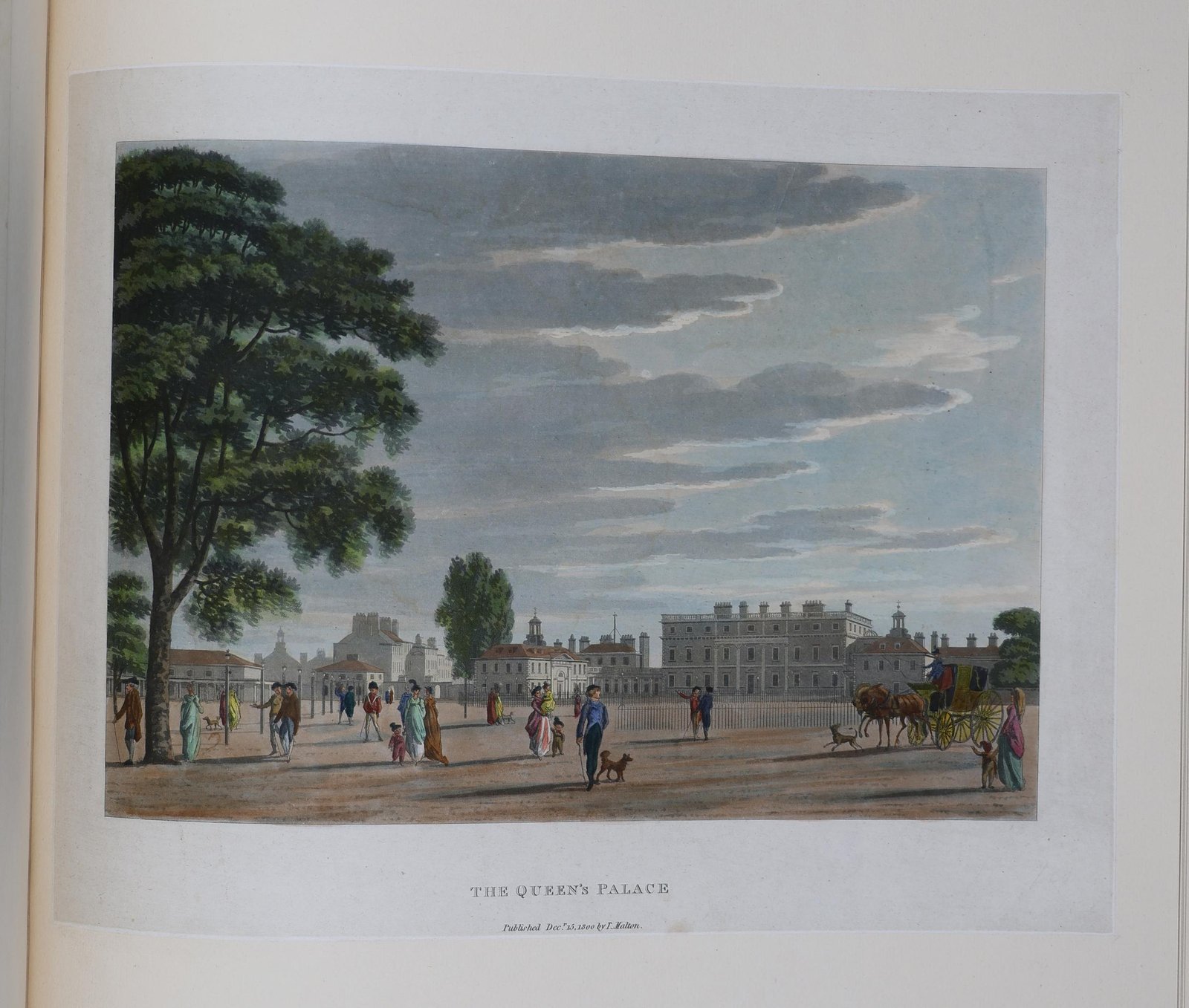
St James’s Palace continued to be the official and ceremonial residence of the Royal Family, with the name Buckingham Palace first used in 1791.
After George III’s death, George IV continued renovations on the Palace. With the help of his favoured architect, John Nash, he turned the house into a palace. The façade was designed on George’s preference for French neoclassical architecture.
After George IV’s death, his brother William IV hired Edward Blore to finish the remodelling. William preferred Clarence House and never lived in the palace.
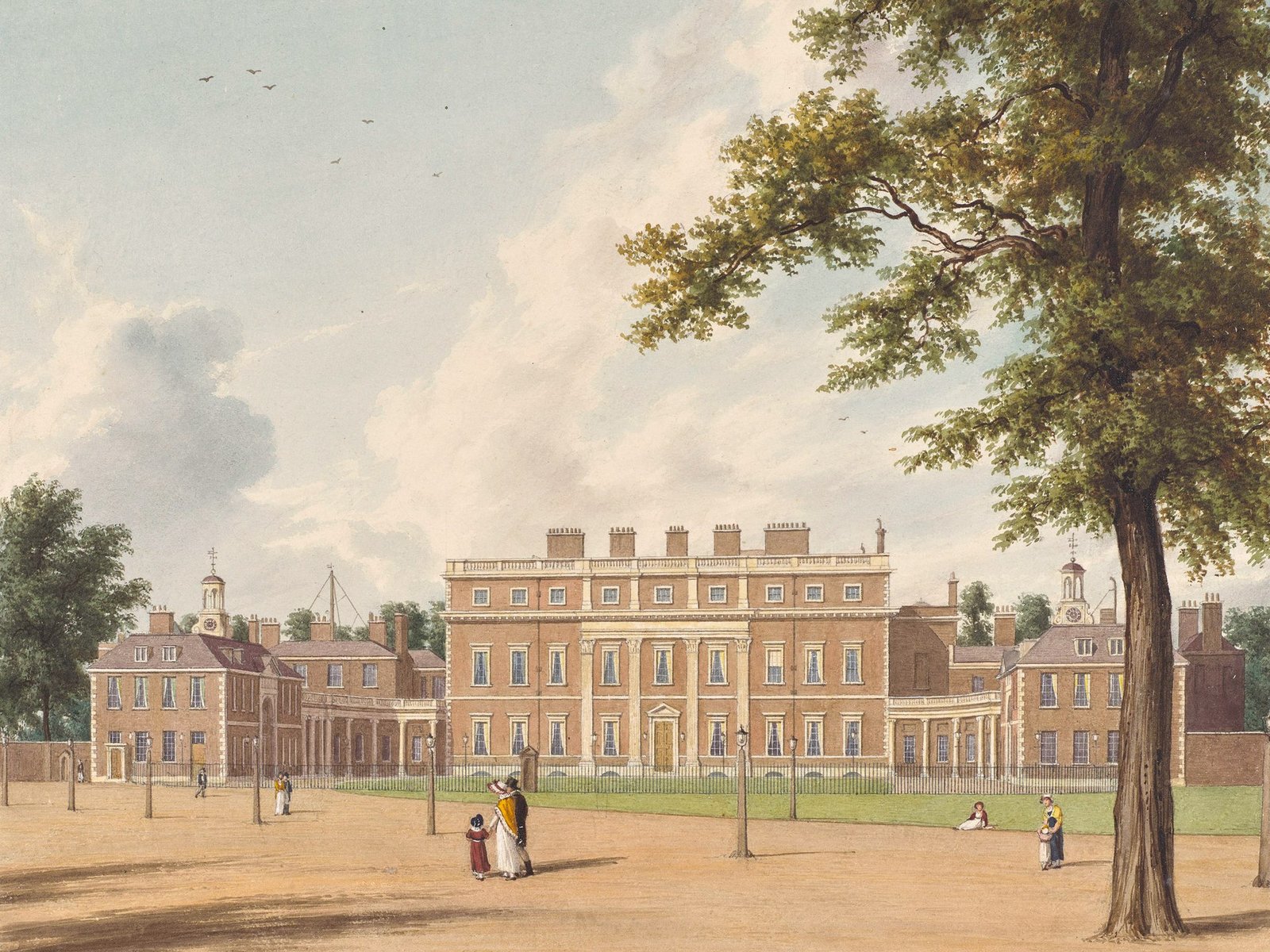
In 1834, after the Palace of Westminster was destroyed, William offered to convert the not-yet-finished Buckingham Palace into a new Houses of Parliament; his offer was declined and instead Parliament voted funds for the ‘completing and perfecting’ of William’s palace for royal use.
Victoria’s Buckingham Palace
After Victoria’s accession to the throne in 1837, it became the principal royal residence, making her the first Monarch to reside in the palace.
Although the state rooms were filled with gilt and colour, the necessities of the palace were not as luxurious… The palace was often cold and the ventilation was poor. Victoria also had to hire a rat catcher to take care of the palace’s rat infestation!
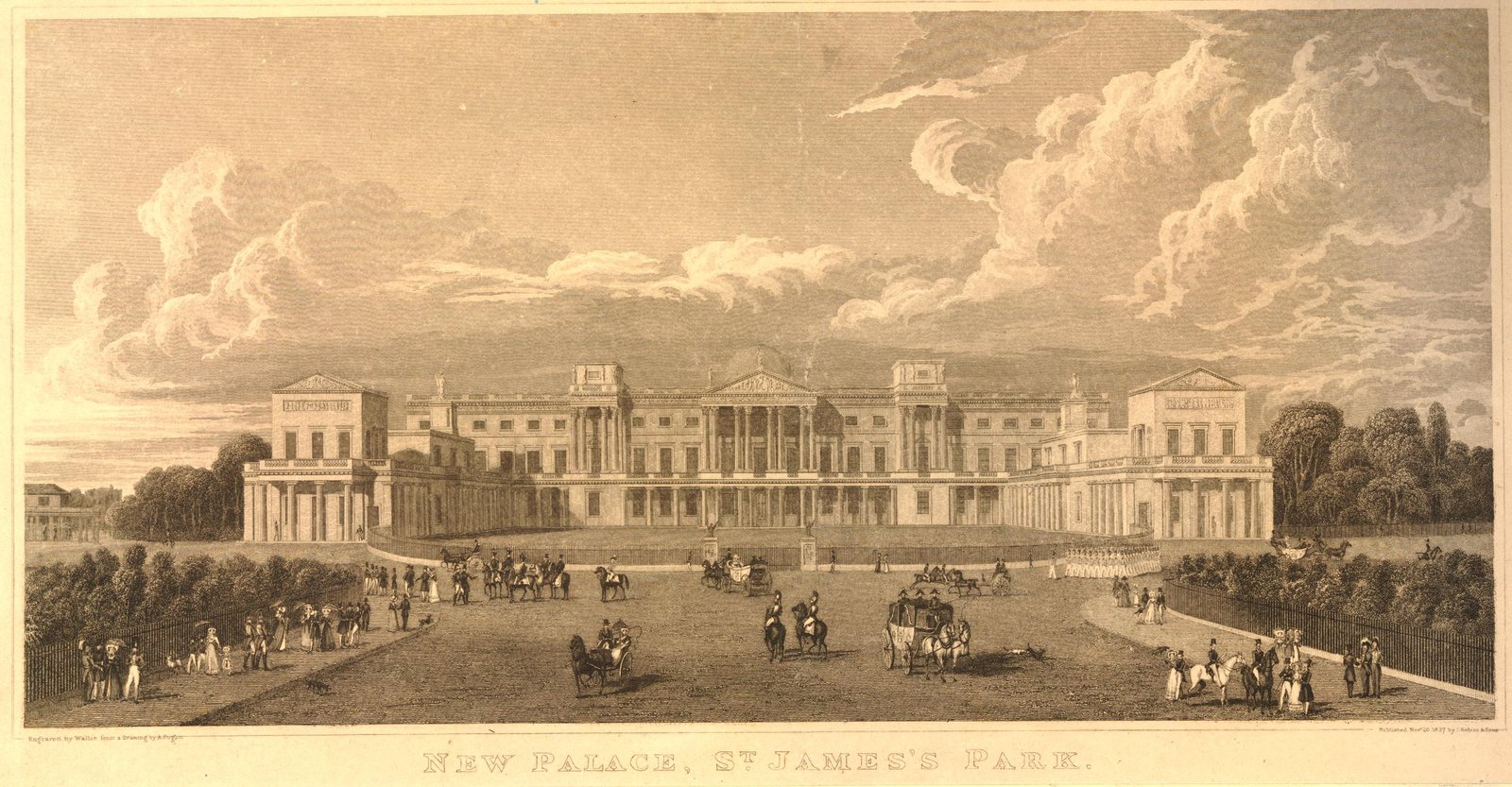
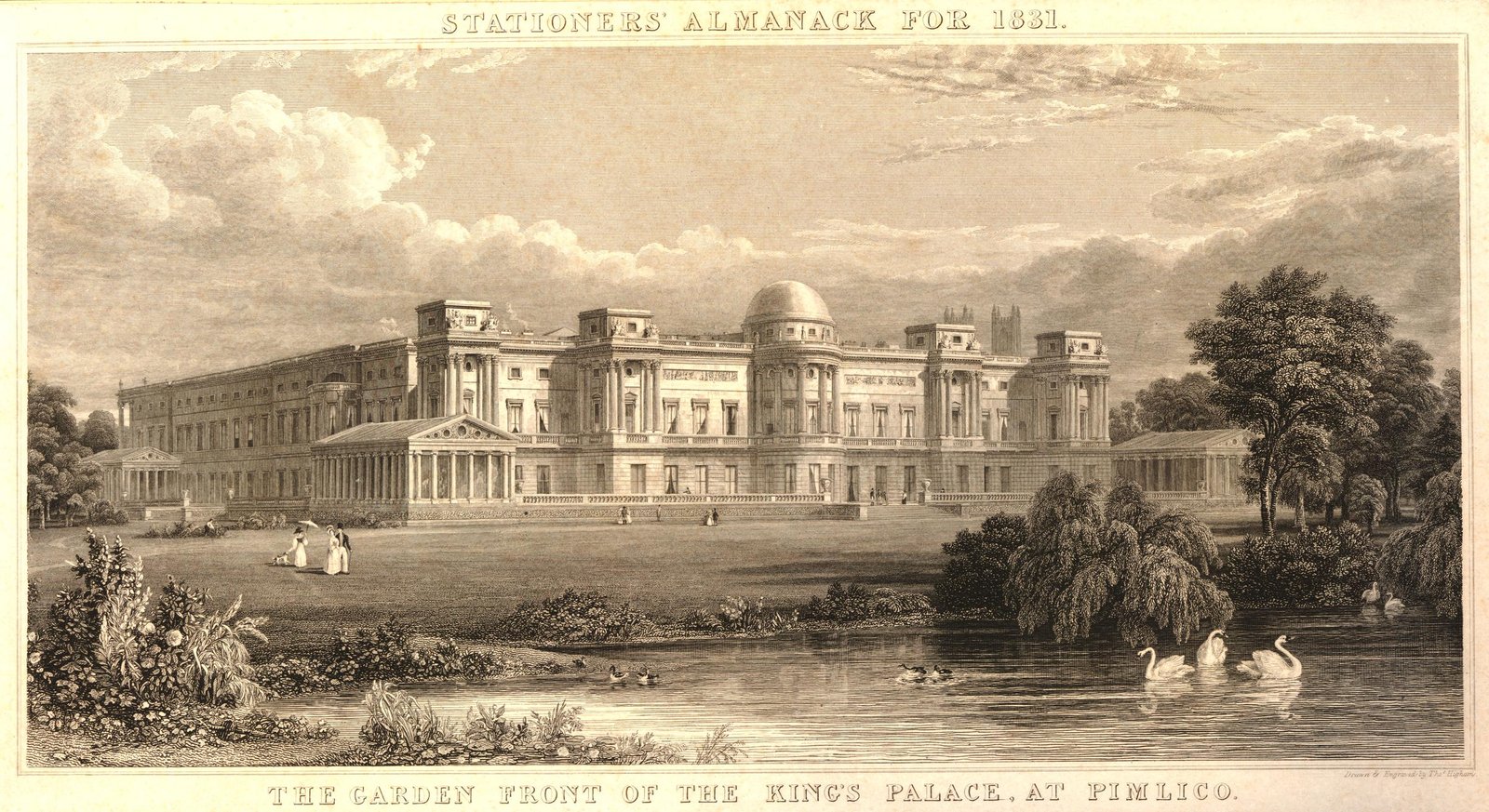
After Victoria and Albert’s marriage in 1840, Albert worked on re-organising the household, staff, offices and dealt with the faults of the palace.
From 1847-1849 a new wing, designed by Edward Blore, was installed which enclosed the central quadrangle. At the same time, the ballroom wing and another suite of state rooms were also built.
The Marble Arch was removed from the front of the palace and still today sits between Hyde Park and the West End.
Work on the palace was paid for by selling Brighton Pavilion – once favoured by George IV – in 1850.
The East Front of the palace faces the Mall and contains the famous balcony where the Royal Family have appeared many times. Victoria is the first Monarch to have stood on the balcony: she appeared in 1851, when she greeted huge crowds who had gathered outside the Palace in celebration of the opening of the Great Exhibition.
The Queen also appeared on the balcony again in 1897 during her Diamond Jubilee celebrations. In her widowhood, Buckingham Palace was seldomly used, as Victoria preferred to be at the other residences away from the spotlight.
Since then, the balcony has become the centre of royal appearances from Trooping The Colour to royal weddings.
20th century palace
Edward VII redecorated the palace when he became King in 1901. The Ballroom, Grand Entrance, Marble Hall, Grand Staircase, vestibules and galleries were decorated in the Belle Époque cream and gold colour scheme, which they still have today.
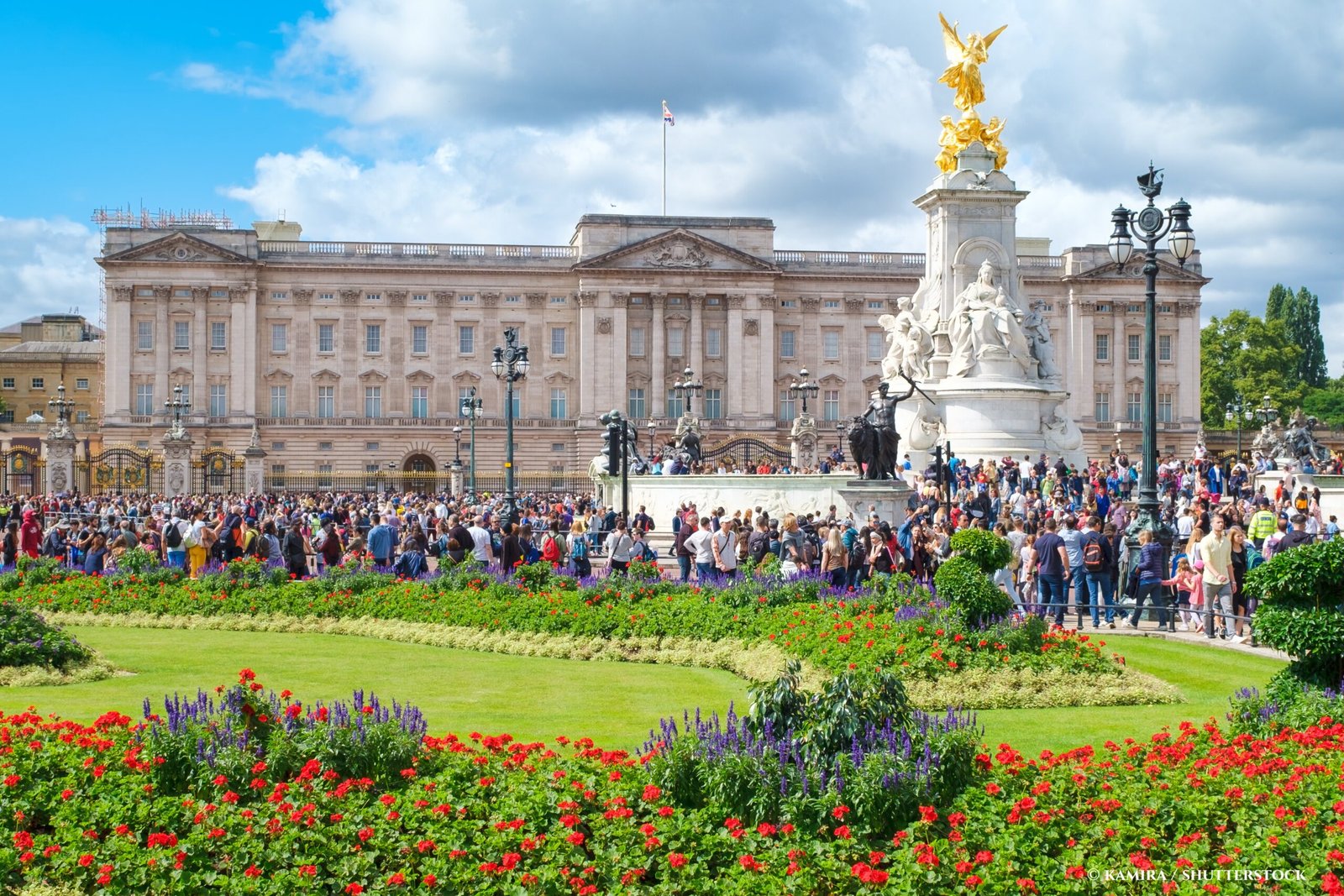
The last major building work took place during the reign of George V, who commissioned Aston Webb to re-design the East Front – the face of the building we know so well. George wanted it to bear resemblance to Lyme Park in Cheshire and it was designed to be the backdrop of the Victoria Memorial, which was designed in 1901 but finally completed in 1911.
The memorial shortened the Mall a little, with funds raised from across the Empire, totalling £250,000.
His consort, Queen Mary, had many fixtures and fittings installed. She re-decorated the Blue Drawing Room, which was previously known as the South Drawing Room.
In 1938, under George VI, the northwest pavilion – which had been designed as a conservatory (shown on the far left of this image) – was converted into a swimming pool. It was frequented by the late Diana, Princess of Wales and Princess Margaret.
The palace was bombed nine times during the Second World War, the most serious of which was the destruction of the palace chapel in 1940. The site of the chapel is now home to the King’s Gallery.
On VE Day 1945, Buckingham Palace was the centre for celebrations with the Royal Family and Winston Churchill appearing on the balcony numerous times over the course of the day (before Elizabeth and Margaret went incognito out into the celebrating crowds!).
Buckingham Palace became a Grade I listed building in 1970 and its state rooms have been open to the public during the summer since 1993. This was originally to raise money to re-build Windsor Castle after the fire in 1992. However, proceeds now fund the conservation of the Royal Collection – artwork, furniture, jewellery and textiles held by the Sovereign for the nation.

http://www.iwm.org.uk/collections/item/object/205021954
There have been many births in the palace from William IV to Charles III, and a great number of christenings have taken place here, such as the christening of The Prince of Wales in the Music Room in 1982.
In 1934, a Greek Orthodox service was held in the private chapel when Prince George, the Duke of Kent, married Princess Marina of Greece.
The last wedding reception held at Buckingham Palace was for The Prince and Princess of Wales (at the time known as The Duke and Duchess of Cambridge) in 2011.