

*This article uses affiliate links; clicking and purchasing via this link may earn us a commission to support our running costs.*
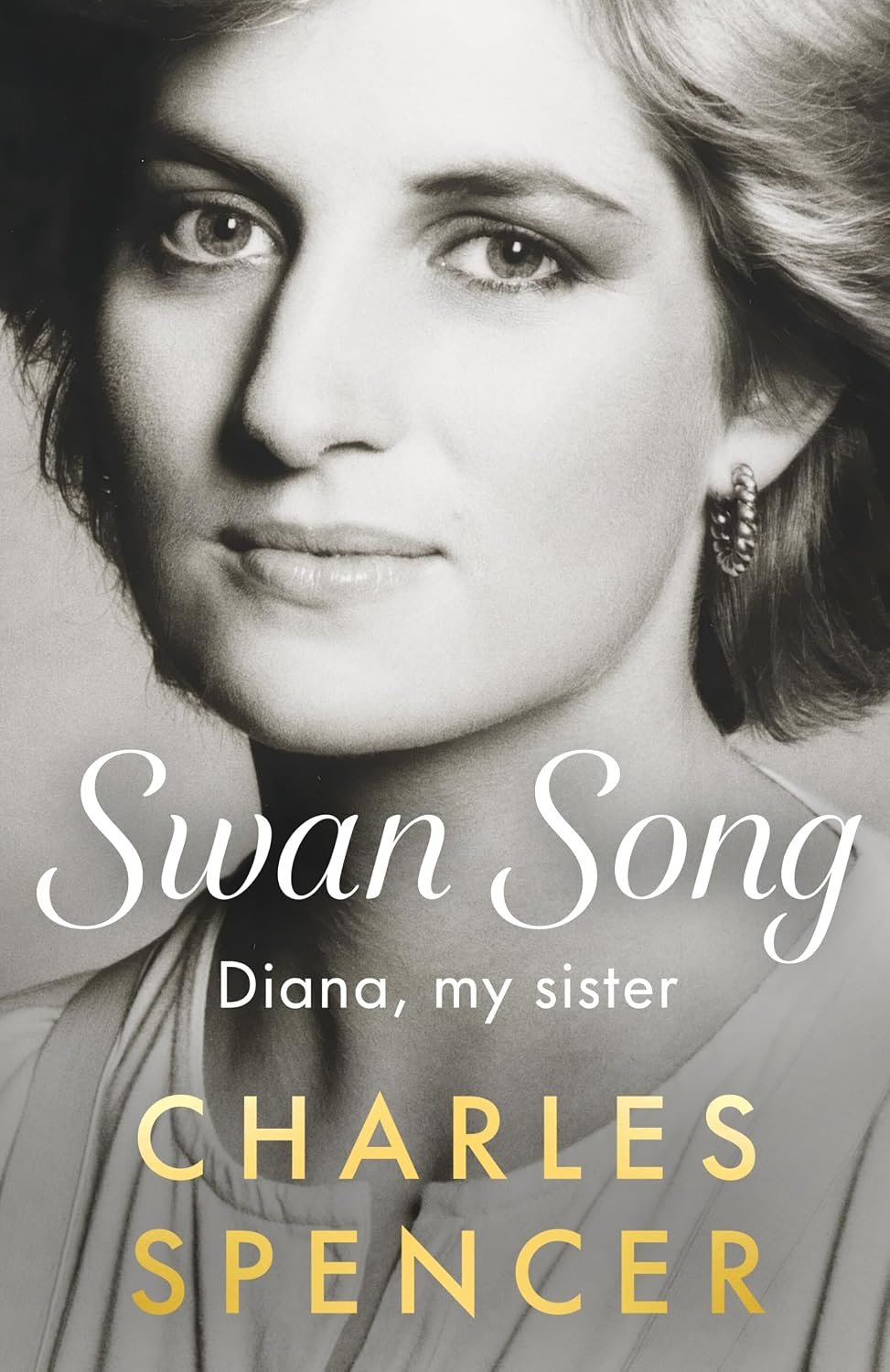
When a royal book arrives, often making some dramatic claim, Buckingham Palace usually says nothing at all. But this week, it made an exception, issuing a pointed, on-the-record response to an assertion in ‘Swan Song: Diana, My Sister‘, the new memoir by her brother, Charles, Earl Spencer.
The response was prompted by a single allegation in extracts that have been serialised in the Daily Mail: the Earl describes a dispute over funeral arrangements in the days after Diana’s death in Paris on 31st August 1997. He claims that during it, The King (then the Prince of Wales) told him on the telephone that Diana would soon be forgotten.
The Palace has rejected that account, in language that recalls one of the most-quoted royal statements in history.
What the book alleges
The quote comes from a passage detailing a disagreement between Charles and the Princes of Wales on whether Prince William and Prince Harry, then 15 and 12, should walk behind their mother’s coffin; the Earl claims that he didn’t want his nephews to do it, but their father did.
It is now a sad, historic photograph and something that seems to have been deeply traumatic for both boys.
The Earl says he insisted Diana would not have wanted it. In the serialised extract, he describes what followed:
He [the Prince] unleashed down the phone what I have always taken to be his pent-up contempt for Diana, and his horror that the world was so bowled over by her death. ‘Rest assured,’ he hissed, ‘we’ll forget her soon enough!’

In Swan Song, Spencer wrote he was ‘so stunned’ by the comment that he paused before responding: ‘I can’t believe you just said that.’ He then hung up the phone.
There is no evidence to corroborate the private conversation from three decades ago, only the Earl’s recollection.
The underlying disagreement isn’t new, though: in 2017, the Earl told BBC Radio 4’s Today programme that he had objected to William and Harry walking in the procession. He said he was later told they wanted to do it, which he came to believe was untrue.
What the Palace said
A Buckingham Palace spokesperson said in response: ‘While we do not comment on books as a matter of principle, His Majesty is mindful that the pain of fraternal grief can cloud reason, affect judgment and colour memory in ways others do not recognise, even many years after such a loss.’
Reports suggest the Palace regards the alleged remark as out of character for The King, who was managing his own grief and that of his sons at the time.
Julian Payne, Charles’ former communications secretary from 2016-2021, told the BBC that he didn’t recognise ‘the way The King is being characterised in those remarks’, reports The Telegraph. He described the statement itself as ‘highly unusual’, and a sign of how strongly the Palace must have felt about the accusation.
This period of employment included the 20-year anniversary of Diana’s death in 2017. He said: ‘Naturally, we ended up discussing her several times during that summer because the media interest was so intense.’
‘What I remember was he was very clear that there was never to be any criticism, never to be any pushback on the narratives that were usually highly critical of him,’ Payne said. ‘He was absolutely emphatic that we were to respect her memory and not undermine it in any way. When he was telling us there was never to be any criticism or pushback, that wasn’t about him. That was absolutely about the late Princess and her memory, so it seems to me very odd that, in the moment itself, with the grief of his family and his own shock, that he would choose that moment to use those words. It’s just not language that I recognise.’
Why silence is the usual rule
Indeed, the Palace’s default when faced with books, interviews and documentaries with various claims is not to engage, and it is an entirely practical strategy: a response can amplify a claim, and it draws the institution into a public argument it can rarely win outright. And so it has here.
That approach is often summed up in the maxim ‘never complain, never explain’, closely associated with the Royal Family (though its origins are disputed).
That silence has held through some significant publications, including The Duke of Sussex’s memoir Spare in 2023. When royal households have wanted to push back, they have more often done so indirectly, through unattributed briefings to royal correspondents, rather than in a named statement.
The 2021 precedent
The closest parallel came on 9th March 2021, shortly after The Duke and Duchess of Sussex’s interview with Oprah Winfrey was broadcast. Buckingham Palace issued a statement on behalf of the late Queen. It said the issues raised, particularly that of race, were concerning, and added: ‘Whilst some recollections may vary, they are taken very seriously and will be addressed by the family privately.’
‘Recollections may vary’ quickly became shorthand for a polite but firm refusal to accept an account at face value. Yesterday’s statement follows the same pattern, in that it neither calls anything untrue, and both frame the dispute as one of memory, and in this case, influenced by strong emotions.
The differences are worth noting, though: the 2021 statement was notably warm, promising to resolve matters privately.
This remark places the question more directly on the author’s state of mind, which makes it the sharper of the two.
Why now?
Three factors might explain why the Palace chose to respond.
- The claim is personal. It concerns Charles himself rather than the institution, and a remark about the mother of the heir to the throne, who still remains popular.
- The timing. The extracts appeared days before publication. The book is also positioned ahead of the 30th anniversary of Diana’s death in August 2027, when interest will peak again.
- The permanent record. The Earl says he wrote the book to counter ‘untruths that have become accepted over time’. An allegation left unanswered now risks becoming exactly that kind of accepted account. In that sense, both sides are contesting the same thing: the permanent record of those days.
The approach carries its own risk, as a statement that attributes a bereaved brother’s account to grief may be read by some as dismissive, and it remains to be seen how it lands. Current sentiment appears to be that the claim clearly struck a chord with The King, who felt he must respond due to the severity of the claim.
The book will be in shops on 22nd September, and carries the blurb:
Beautiful. Beloved. Hunted. The extraordinary life and death of Diana, as told by her brother, Charles – available to pre-order now.
‘When asked, ‘What was it like, growing up with Diana?’, my first thought is always, But I don’t know what it was like not to grow up with her…’
In September 1997, Charles Spencer stood in Westminster Abbey before a watching world and shared his grief at losing his beloved sister, Diana. Now, nearly thirty years later, he tells the astonishing story of his life with Diana and the tragic week of her death.
In childhood, Charles and Diana, the youngest Spencers, were inseparable – secretly calling one another Duch and Carlos. As each other’s closest confidantes, they roamed the family estate, endured extremely challenging boarding schools, survived terrifying nannies and helped each other through the agony of their parents’ divorce.
Yet everything changed when Diana married the Prince of Wales, now King Charles III, and overnight became a global icon. Charles saw his older sister serve the world’s marginalized and relish being mother to her treasured sons.
But, pursued by a barbaric press as her royal marriage crumbled, she was left desperately alone. Charles always tried to be there for Diana – until that black night in August, 1997.
In Swan Song, Charles Spencer provides the most intimate, loving and honest portrait yet of his sister.
The history before it
The dispute belongs to one of the most scrutinised weeks in the modern Monarchy’s history. Diana’s death prompted intense public mourning, and the Royal Family’s initial response drew sharp criticism. The late Queen then addressed the nation in a live broadcast on 5th September 1997, which some people thought was far too slow for the gravity of the situation.
The following day, the Earl walked behind his sister’s coffin alongside William, Harry, Charles and the Duke of Edinburgh, in a procession watched around the world by more than two billion people.
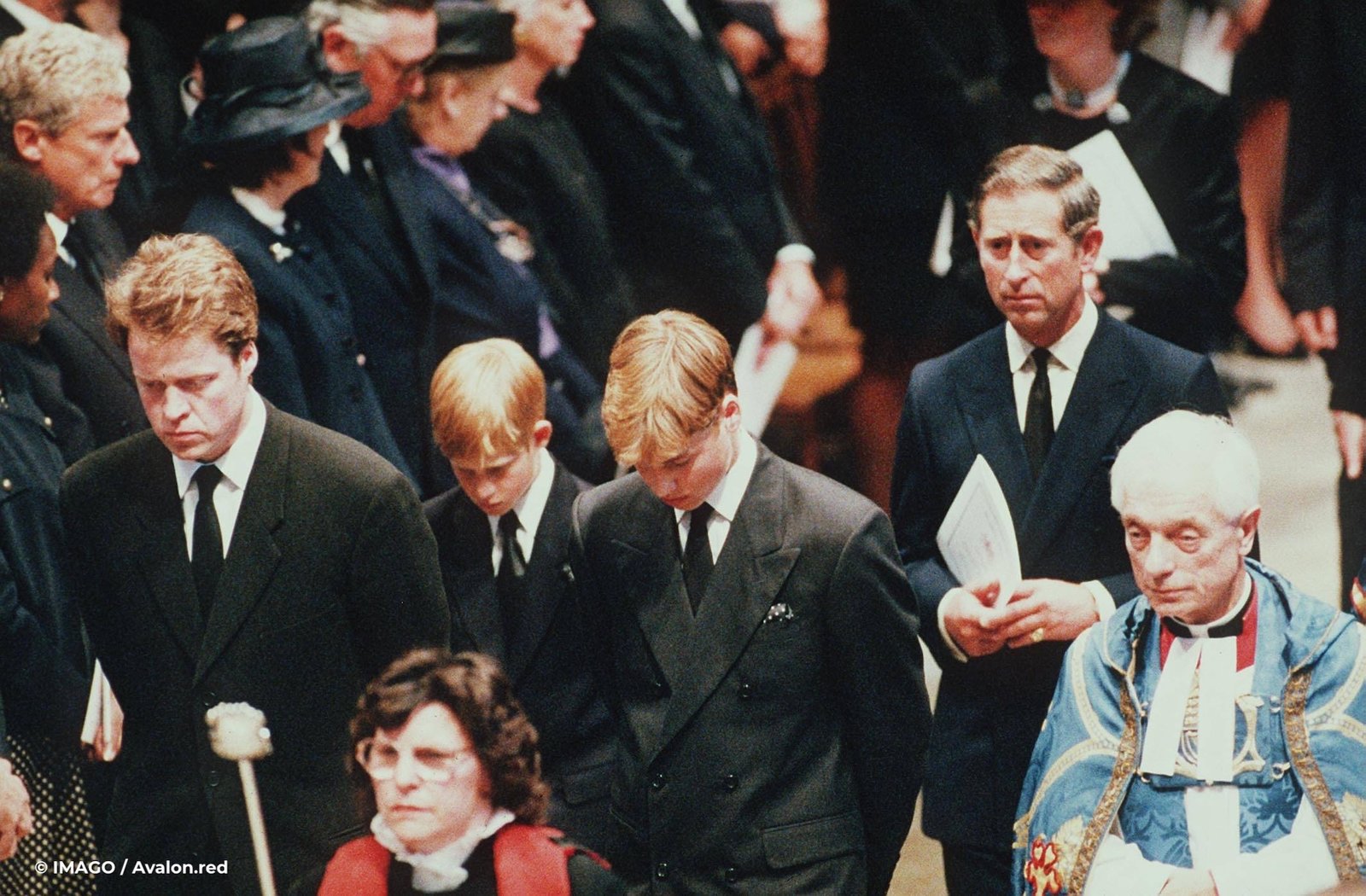
At Westminster Abbey he delivered a highly personal eulogy, addressing Diana’s difficulties with the press and with the Royal Family, and its reference to the Spencers as her ‘blood family’ was widely seen as a rebuke to the Windsors.
What it tells us
The Monarchy has traditionally relied on silence to outlast criticism. Twice in five years, it has decided that some claims cannot be left to stand.
In fact, I’d even go as far as to argue that this is a wider trend of the palace being more reactive when it recognises the scale of a threat. When Andrew Mountbatten-Windsor was arrested in February 2026, a statement was very quickly released that had Charles express that the law must take its course, and no one was above it.
Whether that marks a lasting change in how the Palace manages its record, or remains a rare exception, may become clearer as the 30th anniversary approaches.


