


The Princess of Wales made a surprise appearance in Liverpool on World Suicide Prevention Day today (10th September), joining The Prince of Wales as he launched a new suicide prevention toolkit for the sports sector.
William had been due to attend alone, but Catherine stepped out of the car beside him as it pulled up at Hill Dickinson Stadium, Everton Football Club’s new home on the city’s waterfront.
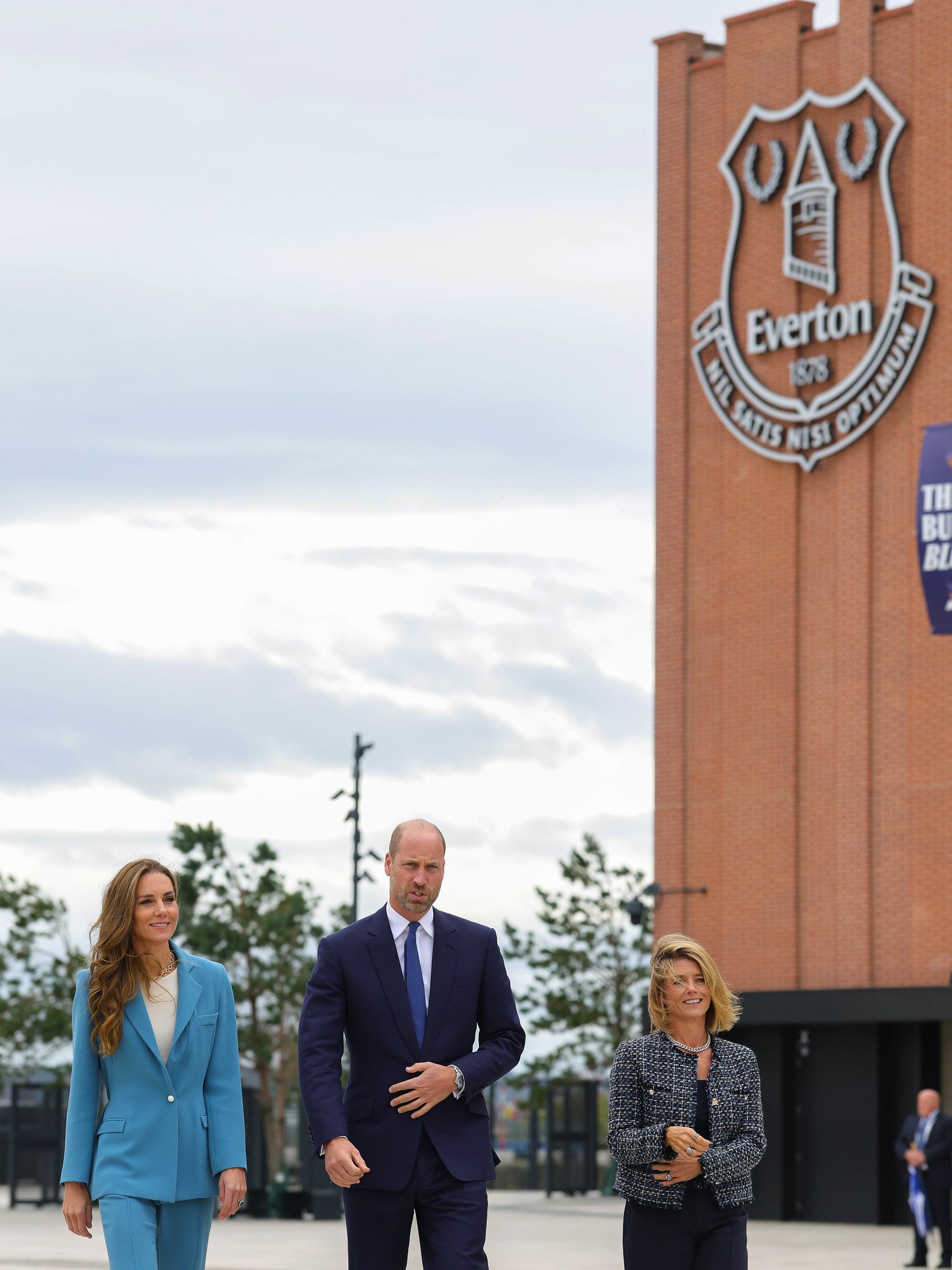
It was the couple’s first joint engagement since their summer break, and since Prince George began school at Eton College on Tuesday. Reports said the Princess wanted to be there to show her support for a cause both have championed for years.
A bench with a purpose
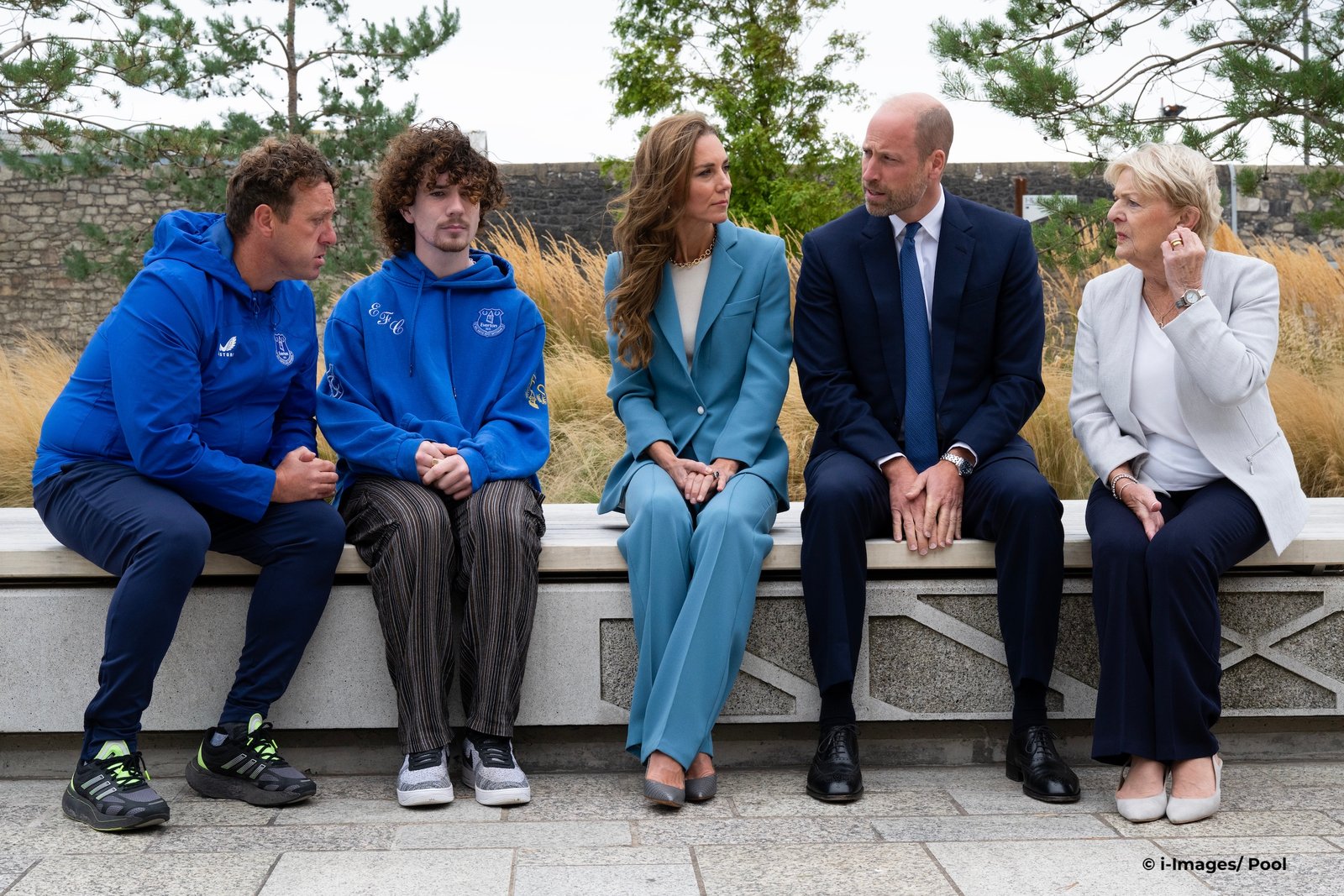
The couple’s first stop was a bench installed at the stadium last season in memory of Gary Speed, the former Everton midfielder and manager of the Wales national team, who took his own life in 2011. They sat with his mother, Carol, who has spoken publicly about the importance of talking about mental health and seeking help.
Prince William asked Mrs Speed whether she thought Gary had been a ‘breakthrough’ moment for people talking. She said he had.
The bench functions as more than a memorial: on match days, when Everton play, a man named John Bilsborrow sits there. The mental health support worker with Everton in the Community, the club’s charity, acts as a point of contact for anyone who needs help.
Suicide accounts for more than 7,000 deaths a year in the UK, according to Samaritans, and it is the biggest cause of death for men under 50.
What ‘On Your Side’ asks of sport
The toolkit was developed by The Royal Foundation, William and Catherine’s charitable vehicle. Its partners were the British Standards Institution, the UK’s national standards body, and mental health charity, Chasing the Stigma.
It has been written for everyone in sport – from grassroots players and coaches to professionals and fans, designed to help people spot the warning signs of suicide, start a conversation, and connect someone with support before a crisis. Backed by research in the sports sector, it is also informed by a ‘wide range of partners from across the suicide prevention and sports sectors’.
At its centre is a five-step framework, GOALS that supports people to have the conversation around mental health and thinking about suicide – and potentially save a life:
- G – get ready
- O – open the conversation
- A – ask the question
- L – listen and respond
- S – support and signpost
It’s available through Chasing the Stigma’s Hub of Hope, the UK’s largest mental health support directory.
According to the Hub, the toolkit is based on The British Standards Institution’s standard BS 30480 ‘Suicide and the workplace – intervention, prevention and support for those affected by suicide’, which was co-produced with over 70 organisations and individual contributors.
This ’emphasises that suicide prevention isn’t just about individuals; it’s about how organisations show up for their people and play their role in suicide prevention. That means creating safe spaces, training people to know what to do, and continuing to learn and improve’.
The Football Association (FA), of which William is patron, has committed to embedding the toolkit across the organisation, including its grassroots network, while the Premier League and British Cycling have also pledged to prioritise suicide prevention. Team GB, Britain’s Olympic team, will use the resource with all its athletes and staff.
Dame Kelly Holmes, Gabby Logan, Jill Scott, and Dame Laura Kenny were among the sporting figures at the launch today.
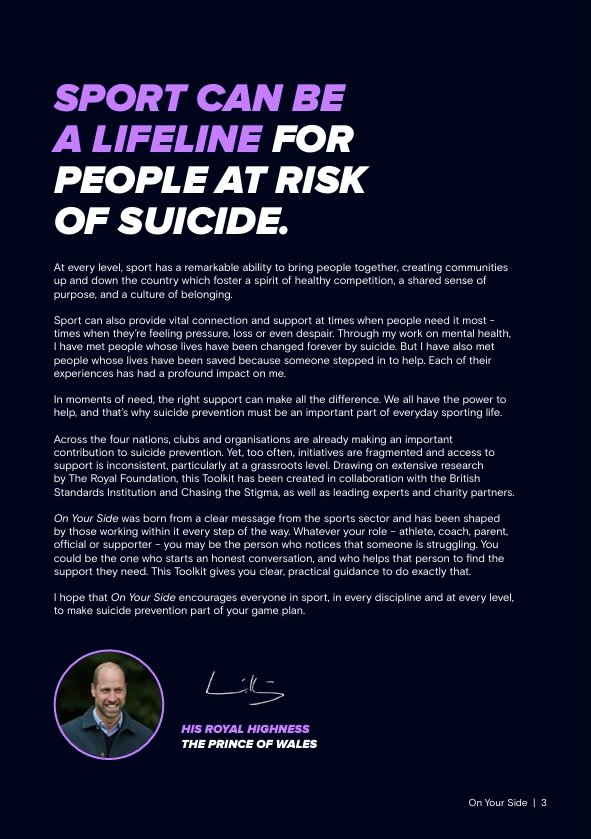
In his foreword to the toolkit, the Prince writes about the ‘profound’ experience of seeing the impact of suicide, as well as those whose lives have been saved by others who have ‘stepped in’.
The Royal mentions the fragmentation of initiatives and access to support ‘particularly at a grassroots level’.
‘In moments of need, the right support can make all the difference,’ he says. ‘We all have the power to help, and that’s why suicide prevention must be an important part of everyday sporting life.
‘Whatever your role – athlete, coach, parent, official or supporter – you may be the person who notices that someone is struggling.’
A decade in the making
The launch builds on ten years of work from the couple: in 2016, The Royal Foundation launched Heads Together, a campaign to change how Britain talks about mental health. Three years later, Heads Up took that message into football in partnership with the FA.

On World Suicide Prevention Day last year, William visited a mental well-being hub at Cardiff’s Principality Stadium. The hub is run by the Jac Lewis Foundation with the Welsh Rugby Union, of which he is patron.
Weeks later, the Foundation launched a National Suicide Prevention Network, bringing charities together across all four nations of the UK.
What has changed in that ten years is the focus. The early work opened up a general conversation about mental health, but On Your Side addresses suicide directly, including how to ask someone plainly whether they are thinking about taking their own life.
Why sport?
William’s argument is that sport reaches people other services can’t.
In his remarks, he said: ‘Sport has the ability to reach people who may never walk through the door of a mental healthcare service. People who may never seek support themselves and may be struggling in silence.’
The launch also shows one of the quieter parts of a working Royal’s role. Few other figures could bring the FA, the Premier League, British Cycling, and Team GB into the same commitment on the same afternoon. In that sense, convening was the real work of the day – using the sway of a royal title to gather many organisations behind a single cause.
The future King narrates the launch film, which features England captain Harry Kane and Formula 1 driver, George Russell. He puts its message simply: ‘You don’t need to be an expert to support someone who’s struggling. You just need to find the courage to have the conversation.’
If you’ve been affected by anything in this article, or finding life difficult at the moment, Samaritans are available free, day or night. Call 116 123 in the UK, or visit samaritans.org.For those outside of the UK, you can use Befrienders or Find a Helpline to see which organisations are available to support you.