

Thousands lined the streets to watch Elizabeth II’s coffin make its final journey from Westminster Abbey to St. George’s Chapel on 19 September 2022.
As the hearse came down the Long Walk lined with a bed of flowers, it passed by a black Fell Pony named Emma, and the Queen’s head groom of 28 years, Terry Pendry.
Emma stood in a gap between hundreds of thousands of floral tributes with her late mistress’ headscarf laid across the saddle; Pendry, in his riding get up, bowed his head as the coffin passed. It was a symbol of respect to the Queen’s lifetime adoration of horses and conservation work to save rare breeds, like Emma, and a final goodbye from her noble steed.
Her passion however, had started at the other end of her life – sources differ but she was between four and six years old when she was gifted a Shetland pony by the name of Peggy, by her grandfather, George V. Soon, the Princess was riding regularly, and it became one of her favourite pastimes.
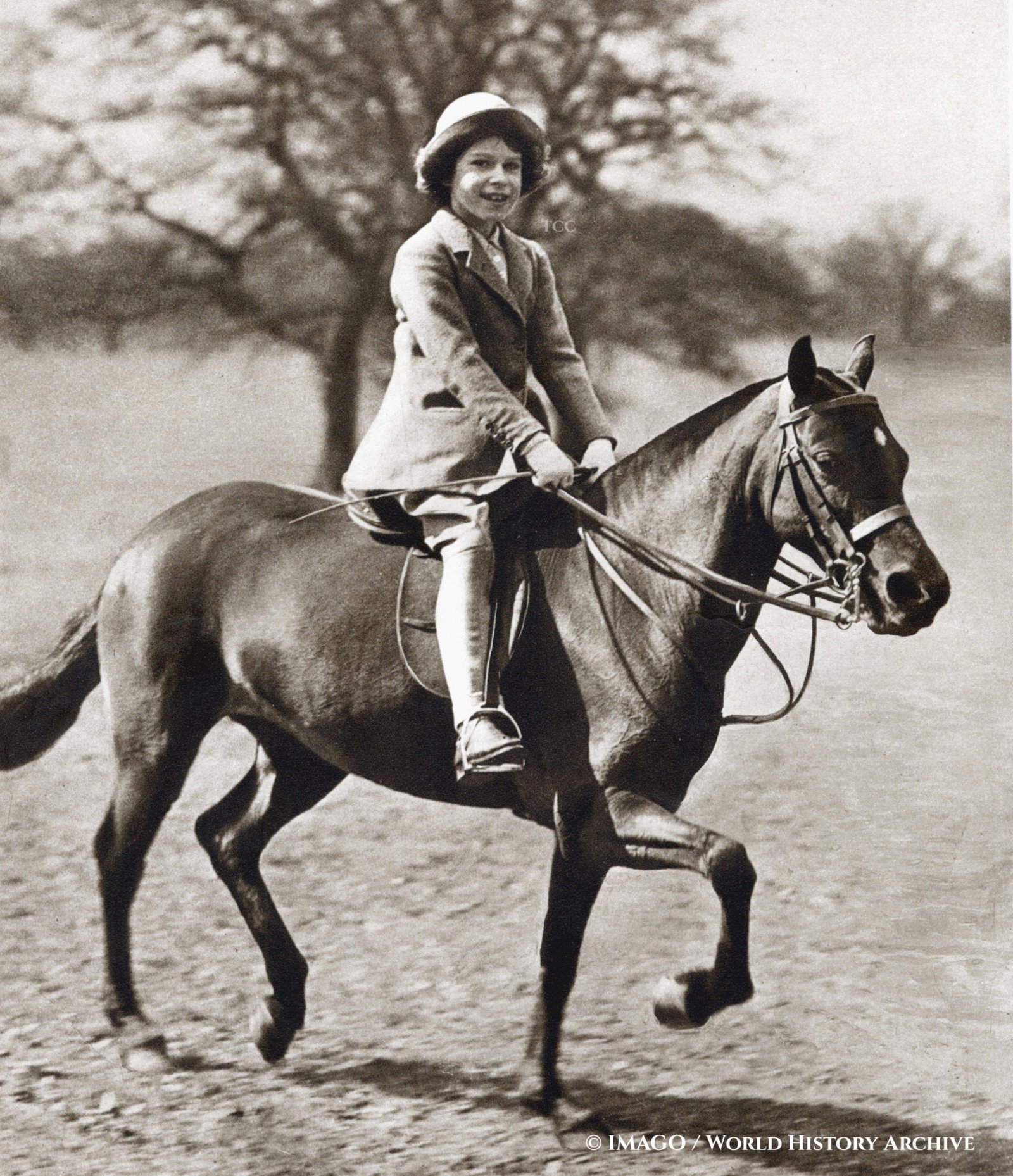
Over the course of her 96 years, riding provided refuge for Elizabeth, from public life as the heir to the throne and later as Queen.
We explore her lifelong passion for everything equine, and how it played a formal role in her official, public life.
Trooping the Colour on horseback
This early experience of riding followed her into adulthood and of course eventually, into her role as Monarch.
As Princess Elizabeth, she had been Colonel of the Grenadier Guards since her sixteenth birthday and in 1947, she rode at the Sovereign’s Birthday Parade (Trooping) for the first time, aged 21. She rode a bay horse called Tommy alongside her father, with her bearing and horsemanship drawing wide praise; Royal Worcester later modelled her on Tommy in porcelain.
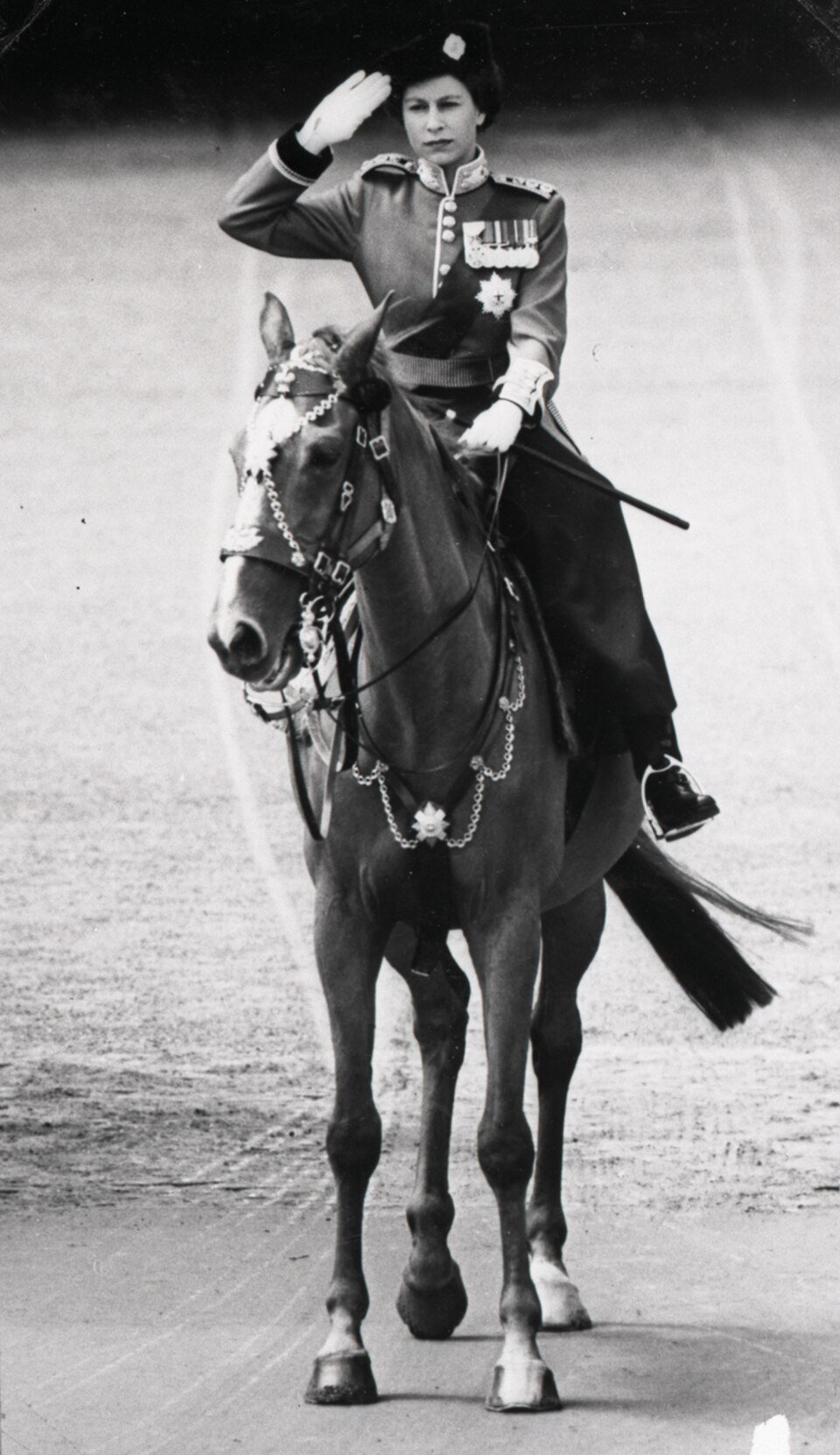
She had a dark blue uniform, with long skirt, for the appearance.
In 1949, George VI ceased riding in the parade, instead taking an open carriage. By 1951, her father’s health was too poor, meaning Elizabeth deputised for him, taking the salute for the first time, riding in the iconic scarlet tunic.
She continued to ride at the ceremony throughout the first three decades of her reign, on more police horses: Winston until 1956, then Imperial (1962–65), Doctor (1966) and Neill (1967-1968).
In 1969, a black mare named Burmese was gifted to the Queen from the Royal Canadian Mounted Police.
The horse was given ahead of the Royal Windsor Horse Show, the Queen asked that her rider carry the Royal Standard so that she could easily follow the horse from the stands.
Burmese carried the Queen at Trooping the Colour for 18 consecutive years, from 1969 to 1986. On their way to Trooping the Colour in 1981, six blank shots were fired with Elizabeth aboard. Burmese was briefly startled but remained calm due to her training, which included being around the sound of firearms. The Royal Family publicly praised the horse’s behaviour after the event.
From 1986 onwards, following the retirement of Burmese, Elizabeth attended in an open carriage rather than training a new charger.
Burmese was put out to pasture at Windsor Great Park and died in 1990. In 2005, during Saskatchewan’s centennial, the Queen unveiled a bronze of herself on Burmese outside the Legislative Building in Regina, sculpted by Susan Velder. It was from here that the mare had hailed.
Years later, when the Queen was asked about her favourite horse, she named Burmese.
Passion for horse racing
Elizabeth inherited her father’s racing and breeding stock and with that, the Sandringham Estate, home to the Royal Stud.
However, before she had even become Monarch, she had had her first winner as an owner: Monaveen won at Fontwell Park in 1949.
She had a particular interest in the breeding side of the sport, becoming patron of the Thoroughbred Breeders’ Association in 1954. That same year, and again in 1957, she was named British flat racing Champion Owner, due to the high winning rate of her horses.
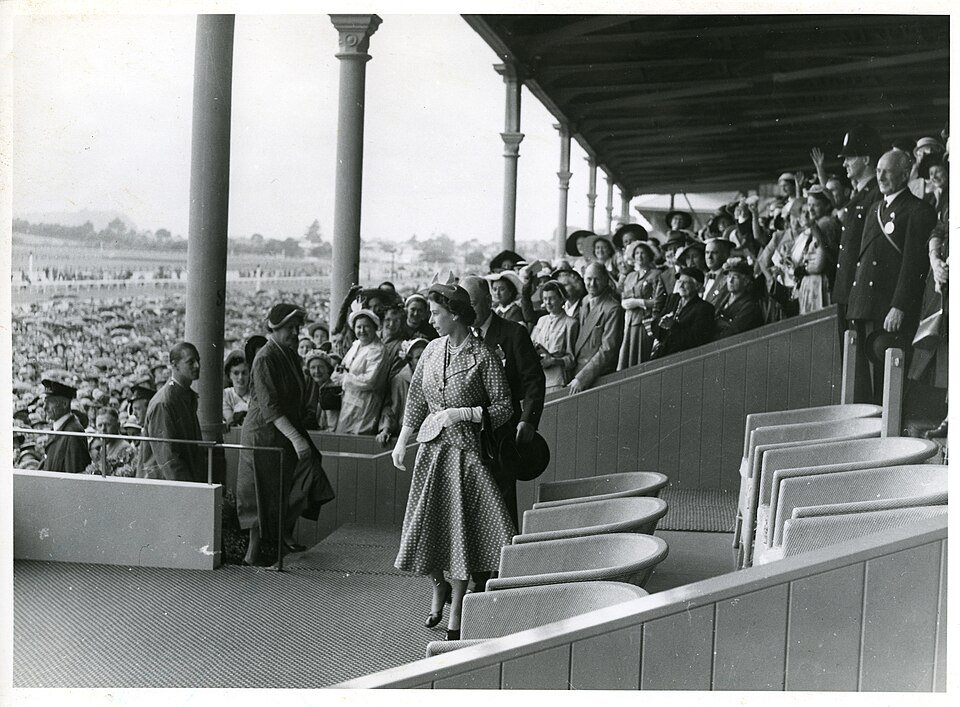
Every morning alongside breakfast, the late Queen read the Racing Post, keeping up to date with the sport. It is reported she kept 25-30 horses in training for most of her reign and she enjoyed watching her horses race – especially during Royal Ascot, the prestigious five-day racing festival, where she saw 24 winners across her 70-year reign.
She named every horse in the stud.
Throughout her life, however, she won more than 1,600 races as an owner, and every one of the five British Classics except the Derby. The closest she came was in 1953, the year of her coronation, when Aureole finished second in the Epsom Derby.
As Queen, her jockeys rode in the royal silks of purple with gold braid, scarlet sleeves and a black cap, the colours inherited from her great-grandfather, Edward VII.
Notable winners include: Estimate, winner of the 2013 Gold Cup by just a neck (the first Monarch-owned horse to win since its inception in 1807!); Pall Mall, winner of the 1957 New Stakes; and Tactical, winner of the 2020 Windsor Castle Stakes, among many more!
Embed from Getty ImagesEmbed from Getty Images
Much of her success can be attributed to her racing advisor and friend, the late Earl of Carnarvon (of Highclere fame), whom she called ‘Porchie’. He served as her racing manager from 1969 until his death in 2001. After this, Lord Carnarvon’s son-in-law, John Warren, began to manage Elizabeth’s horses.
Calculations based on readily-available records since 1988 suggest the Queen’s horses won 534 races from 3,205 runs and earned £7,768,448 in prize money – a strike rate of around 16%! However, it is likely that this was funded from Elizabeth’s private wealth as a passion project, rather than a for-profit venture.
Her love of horse racing took her across the ocean, visiting the ‘horse capital of the world’, Lexington, KY, five times throughout her life. First, in 1984, to celebrate the Queen Elizabeth II Challenge Cup, and last, in 2007, to watch the Kentucky Derby.
Saving rare breeds
It wasn’t just racing she championed: Elizabeth also helped to save rare horse breeds from the brink of extinction.
In the 1960s, the Cleveland Bay, a once-popular horse breed due to its versatile nature and use by the Royal Family, faced a crisis with only around six purebred stallions left in the country… The horse was England’s oldest native breed, so Elizabeth stepped in to save them. She purchased a stallion, Mulgrave Supreme, who was due for export to the United States in 1962.
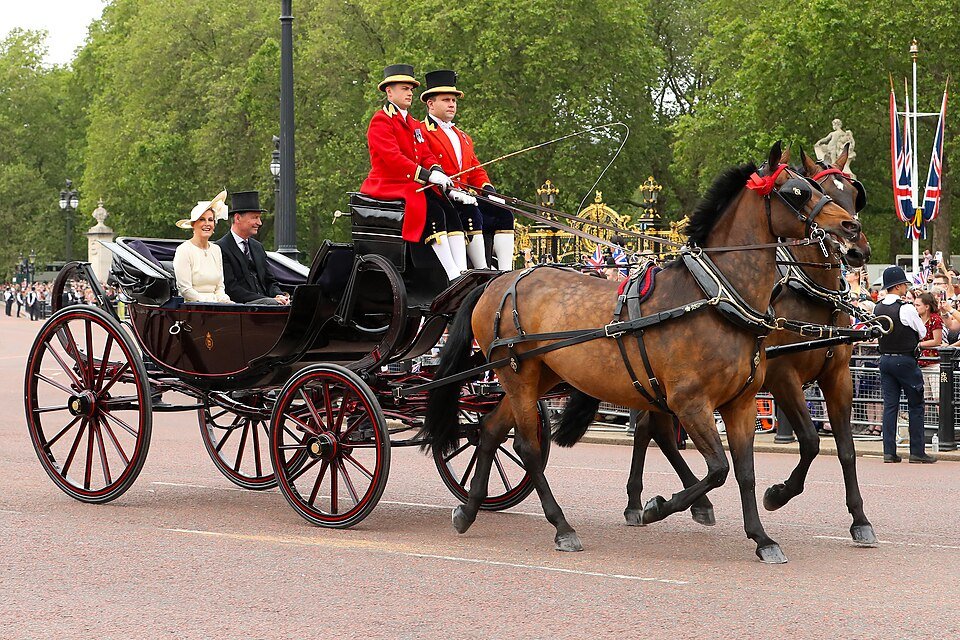
She first used the colt to build up her own stock, then offered him to breeders, both public and private, and within 15 years, the number of Cleveland Bays increased to 36 – 16 of which came from Mulgrave Supreme. The breed today remains rare, with around 500-800 worldwide, but no longer faces extinction.
Cleveland Bays are regularly used to pull royal carriages at state occasions, alongside Windsor Greys.
Along with the Cleveland Bay, Elizabeth can also be credited with bringing attention to both the Fell Pony and Highland Pony’s declining populations. Her efforts through the royal stud at Hampton Court and through breeding at Balmoral, and as patron to the Fell Pony Society and Highland Pony Society in the UK saw the number of ponies and popularity of the breeds improve.

In her later years, Elizabeth preferred to ride Highland and Fell ponies as opposed to taller, more highly-strung breeds. Sanction, her last home-bred riding horse, died in 2002, and it was Terry Pendry who encouraged her to move to natives: closer to the ground, and steadier, for a rider then in her mid-seventies.
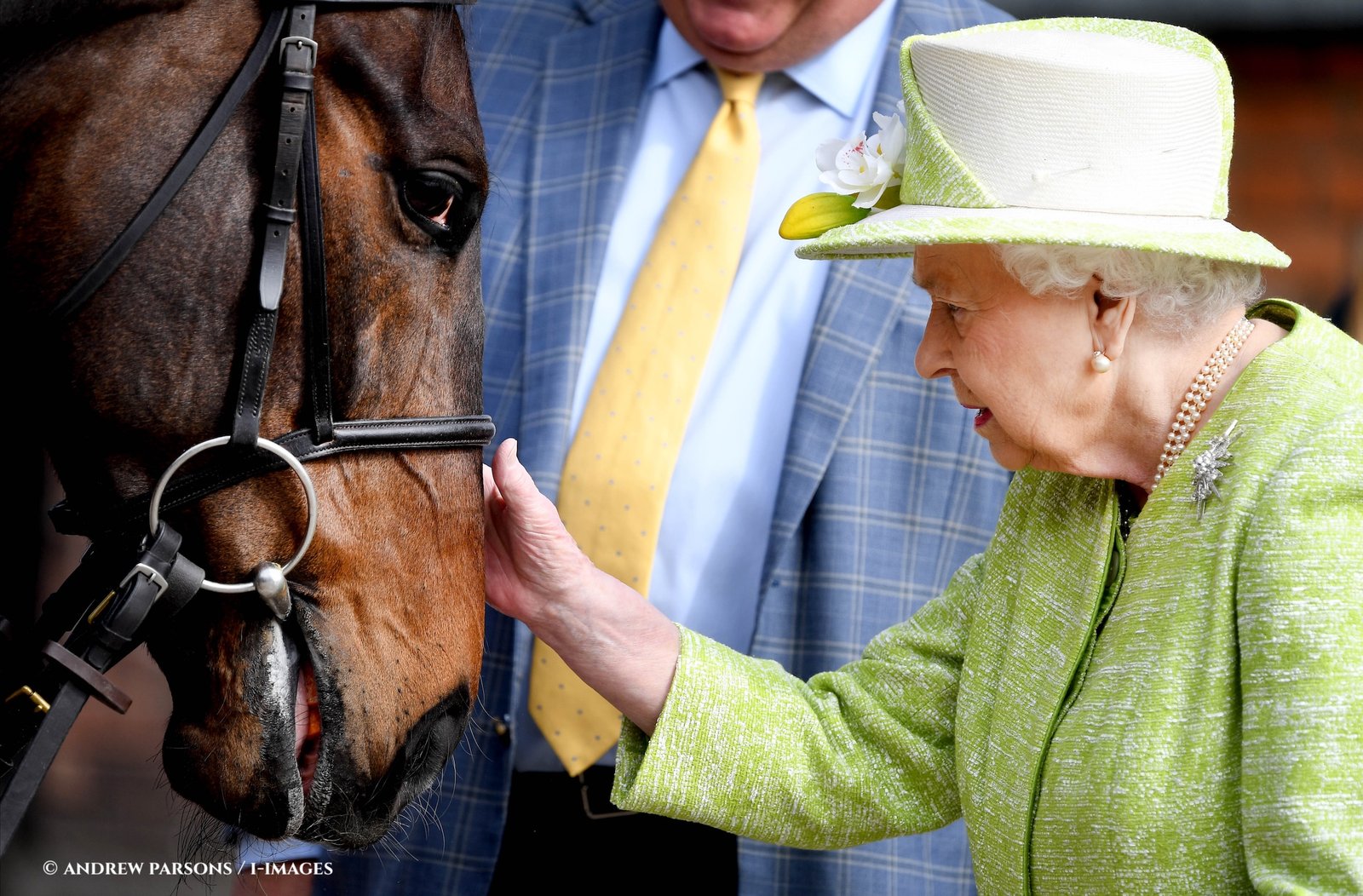
She was photographed riding Balmoral Fern in Windsor Home Park in May 2020 at the age of 94, and Emma remained in work with her into the summer of 2022.
The Queen invites photographer to Windsor to see her horse riding
The Royal Windsor Horse Show
The Queen enjoyed attending the annual Royal Windsor Horse Show, which has been attended by members of the Royal Family since its inception, hosted in her ‘back garden’ within the grounds of Windsor Great Park.
As a child, Elizabeth won the Pony and Dogcart class during the first show in 1943, and as Patron, she attended nearly every year up until her death, presenting trophies and rosettes to winners and cheering on competitors from the royal box. It was a common sight to see the Monarch driving her Land Rover throughout the grounds, in her low-key headscarf and mac, as well as watching from the stands.
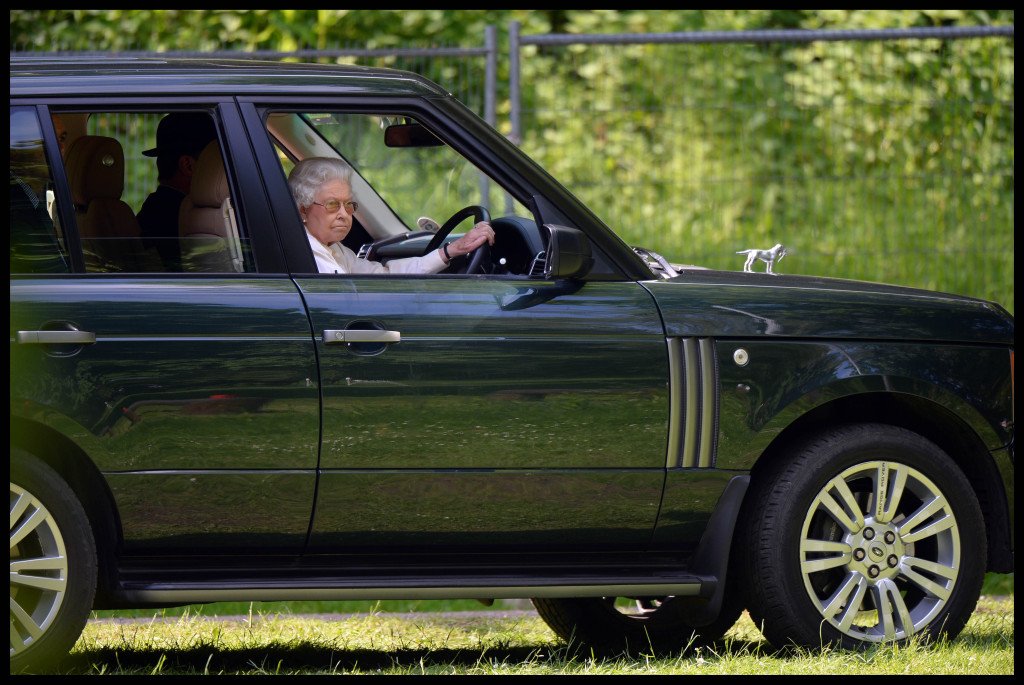
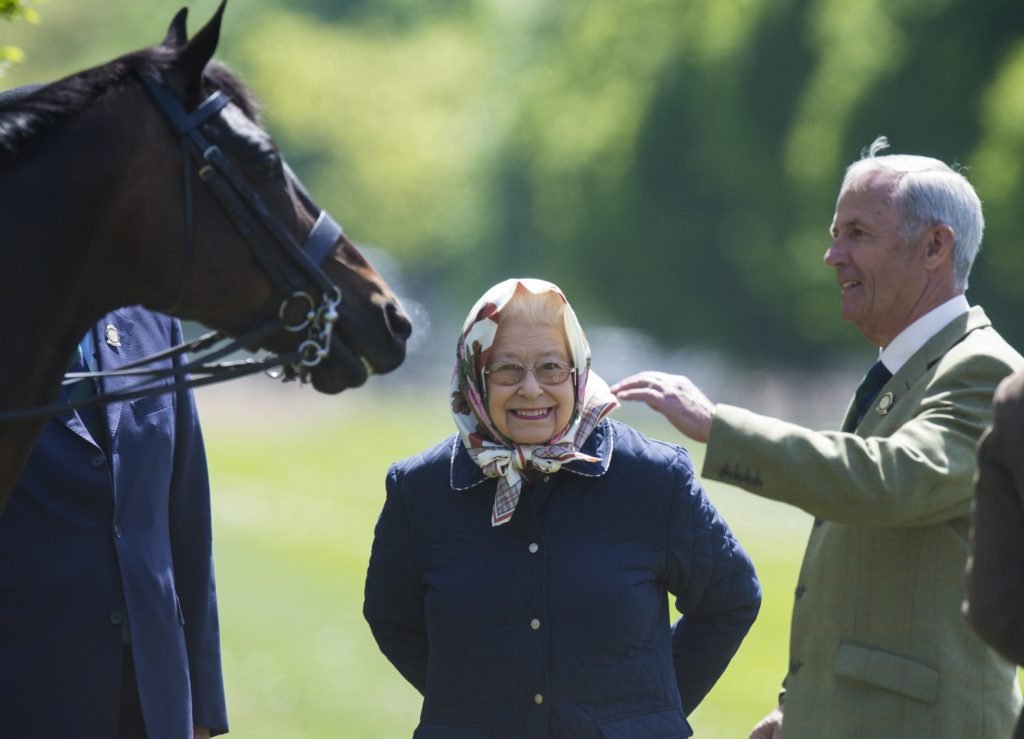
The show grew from one day to two in 1946, three in 1947, four in 1967 and five in 1977, and today is the only international competition in the UK to stage show jumping, dressage, driving and endurance at the same fixture.
The final furlong
The Queen’s last winner came at Goodwood on 6 September 2022: Love Affairs, two days before her death at Balmoral.
She left roughly 100 thoroughbreds, including around 60 in training and 38 mares. King Charles III inherited them, and racing under ‘The King’ has continued without a break, though it is thought he does not quite share the same level of passion as his mother did.
A month later, 14 horses were sold at Tattersalls in Newmarket (among them Love Affairs and Just Fine, the first winner of the new reign) as the royal operation was scaled back.
Queen Camilla is slightly more involved, and is patron of the National Stud, thought to have a more hands-on approach to the royal stables.
Throughout her life, Elizabeth II’s love of horses was evident. From her lifetime involvement with thoroughbred racing to saving breeds on the verge of extinction, it was more than just a hobby for the Queen; it was her life’s work.
Her love for horses has passed down through generations, with Princess Anne, Zara Tindall, and Lady Louise following in her footsteps.
The Princess Royal became European eventing champion in 1971 on Doublet, a horse bred by her mother, and was named BBC Sports Personality of the Year that December; she also rode at the 1976 Montreal Olympics on Goodwill.
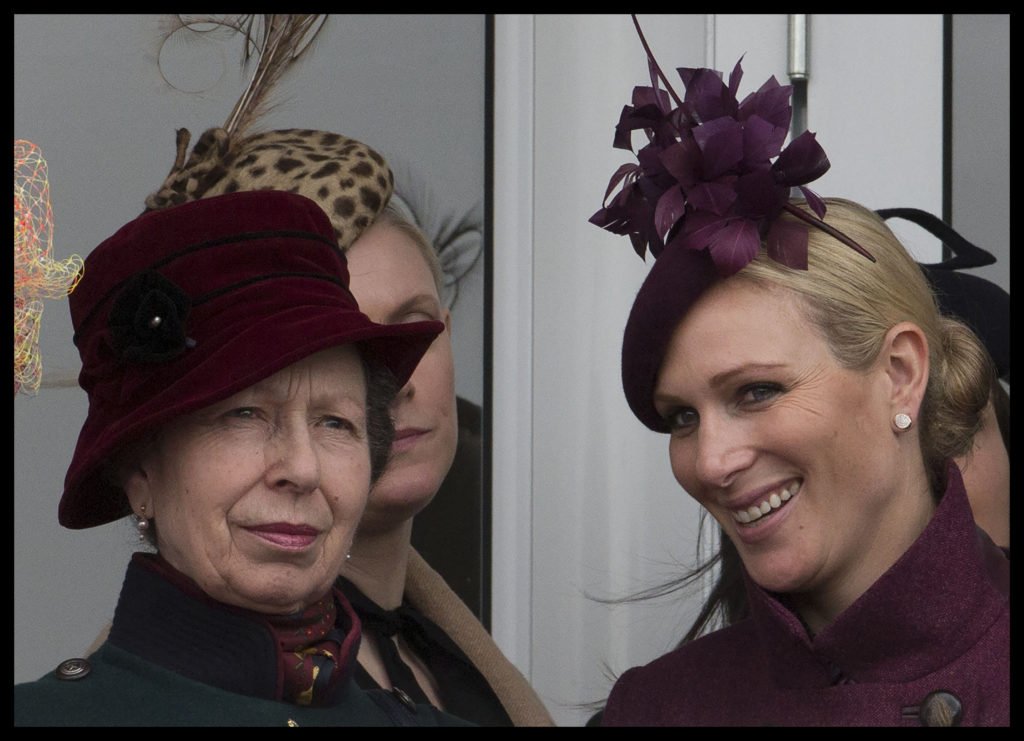
Zara took the world eventing title at Aachen in 2006 on Toytown, and won team silver at London 2012 on High Kingdom, receiving her medal from her own mother, while Lady Louise has continued Prince Philip’s carriage driving, taking the reins of his Fell ponies at both the Platinum Jubilee pageant and the Coronation Concert.
Since her death in 2022, her work continues under The King and Queen.